1. International Relations, Padjadjaran University
2. State Senior High School Number 1 Pangururan, Samosir
1. hendra19001@mail.unpad.ac.id,
2. elvinrosnb@yahoo.co.id
Abstract: This research aims to describe analytically Toba Caldera’s ability to become one of the UNESCO Global Geopark in 2020. The research used a qualitative research method and is done through literature studies, government documents, and internet sources. Researchers founded, there are inter-linkages amongst Indonesia’s central and local government together with stakeholders’ continuous contribution who concern with Toba Caldera’s sustainable tourism development. Those concerning parties fought for Toba Caldera’s recognition status as the UNESCO Global Geopark. From 2011 to 2020, for nine years, the Toba Caldera was finally named a UNESCO Global Geopark during the UN Cultural Body’s 209th Plenary Session held in Paris on July 7, 2020. Toba Caldera Geopark was a worldwide tourist magnet as it was home to 13 sites with breathtaking views, namely: Tongging Sipiso-Piso, Silalahi Sabungan, Haranggaol, Sibaganding Parapat, Eden Park, Balige Liong Spige Meat, Situmurun Blok Uluan, Hutaginjang, Muara Sibandang, Sipinsur Bakti Raja, Bakara Tipang, Tele Pangururan, and Pusuk Buhit. A ceremony where the UNESCO Global Geopark placard will be formally given to the Toba caldera is slated to be held in Jeju, South Korea, by September 2020. According to a statement from the Indonesian Embassy in Paris, Toba Caldera is among the 16 new UNESCO Global Geoparks announced by the organization’s executive board. North Sumatra provincial administration is hopeful that the recognition will help boost foreign tourist arrivals to the destination.
Indonesia-North Korea Diplomatic Relations: Effort to Pursue National Interest and Create Regional Peace
Writer: Hendra Manurung Mahasiswa Doktoral Hubungan Internasional, Universitas Padjajaran email: hendra19001@mail.unpad.ac.id
Direvisi: 14 Agustus 2020 Disetujui: 15 September 2020 doi: 10.22212/jp.v11i2.1466
Abstract: This article aims to analyze the implementation of Indonesia’s foreign policy towards North Korea over its approximately fifty-nine years of bilateral relations, since 17 June 1961. The arguments posited in this regard is that the implementation of Indonesia’s foreign policy towards North Korea has been counterproductive. Under the leadership of President Joko Widodo, Indonesia actually has great potential to influence North Korea’s conducts through the close diplomatic relations that the two countries have developed. The friendship between Indonesia and North Korea began since the two states conducted reciprocal official visits 1964 and 1965. Indonesia’s foreign policy towards South Korea has often been carried out to influence the offensive decisions of North Korean leaders, especially in relation to the issue of nuclear weapon development. The key question is what should and can Indonesia do next to help create peace and stability in the Korean Peninsula by adhering to the principles of a free and active foreign policy? Why is it necessary for Indonesia to do this and how can Indonesia carry out this foreign policy towards North Korea? After becoming President since 2011, Kim Jong-un had to weaken his father’s winning coalition to consolidate domestic political stability. However, North Korea’s domestic market reforms have had the effect of eroding the Kim family’s ideological appeal. This is relevant to the expansion of political influence from Pyongyang, which prioritizes the continuation of a fragile centralized authoritarian power while maintaining sustainable domestic economic growth. Keywords: Indonesia; North Korea; Foreign Policy; Denuclearization; Regional Stability.
Hubungan Diplomatik Indonesia – Korea Utara: Upaya Mewujudkan Kepentingan Nasional dan Menciptakan Perdamaian Regional
Abstrak: Artikel ini bertujuan menjelaskan secara analitis bagaimana implementasi kebijakan luar negeri Indonesia terhadap Korea Utara selama 59 tahun sejak 17 Juni 1961. Argumen yang ingin disampaikan terkait implementasi kebijakan luar negeri Indonesia terhadap Korea Utara adalah kontraproduktif. Indonesia di bawah kepemimpinan Presiden Joko Widodo berpotensi besar untuk mampu memengaruhi perilaku Korea Utara melalui hubungan diplomatik. Persahabatan Indonesia dan Korea Utara dimulai sejak saling kunjung di 1964 dan 1965. Orientasi politik luar negeri Indonesia di masa lalu hingga saat ini, telah sering dilakukan untuk memengaruhi keputusan ofensif para pemimpin Korea Utara, khususnya terkait dengan isu pengembangan senjata nuklir. Pertanyaannya adalah apa yang harus dan sebaiknya dilakukan Indonesia selanjutnya untuk membantu menciptakan perdamaian dan stabilitas di Semenanjung Korea dengan tetap berpegang pada prinsip politik luar negeri bebas dan aktif? Mengapa hal tersebut perlu dilakukan oleh Indonesia dan bagaimana cara menjalankan kebijakan luar negeri terhadap Korea Utara tersebut? Kim Jong-un, setelah menjadi Presiden sejak 2011, harus melemahkan posisi koalisi pemenang ayahnya untuk konsolidasi stabilitas politik dalam negeri. Bagaimanapun, reformasi pasar domestik Korea Utara telah berdampak pada pengikisan daya tarik ideologis keluarga Kim. Hal ini relevan dengan perluasan pengaruh politik dari Pyongyang memprioritaskan pada keberlangsungan kekuatan otoriter terpusat yang rentan seiring bagaimana dapat mempertahankan pertumbuhan ekonomi dalam negeri berkelanjutan. Kata kunci: Indonesia; Korea Utara; Kebijakan Luar Negeri; Denuklirisasi; Stabilitas Kawasan
Writer: Hendra Manurung, is doctoral candidate in international relations at Padjadjaran University, Bandung
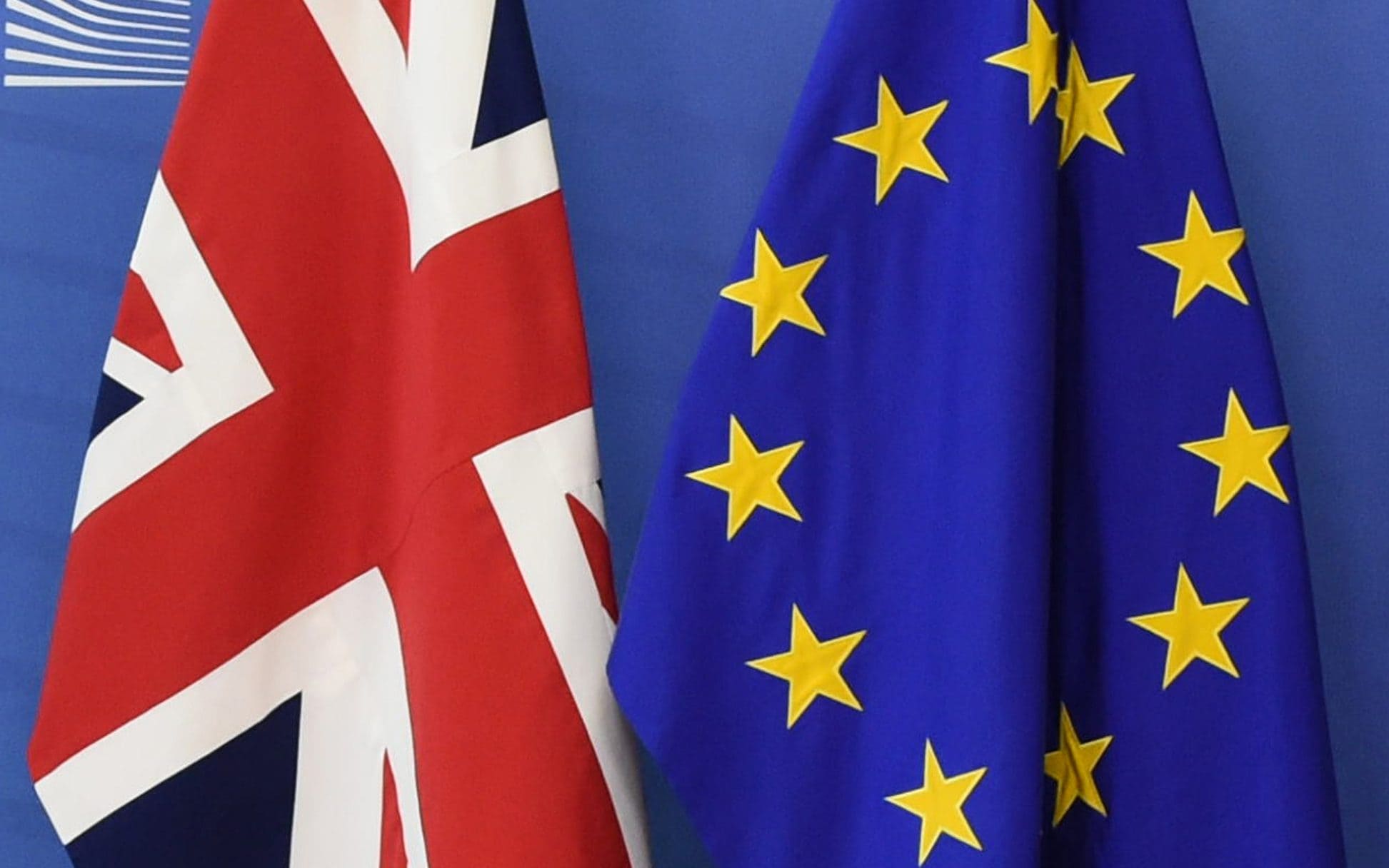
The European Union and the United Kingdom continue to break the deadlock in trade negotiations due to the particular subject matter locked. If there is no agreement, their relationship deteriorated.
The future of trade relations between the UK and the European Union is not getting better. This is because several rounds of negotiations to direct telecommunications between British Prime Minister Boris Johnson and European Commission President Ursula von der Leyen have not been able to bridge the differences in perspective between the two sides. It is mainly related to the standard issue of export and import goods, fishing rights, and the issue of dispute resolution or legal disputes between both sides.
Further, another thing that also complicates the field situation is the plan of Paris against every clause of the EU treaty and the UK which is considered to sacrifice French fishermen and its national fisheries sectors.
In early September 2020, the British Government asked the European Union to take a stand on trade deals after Brexit. According to Boris Johnson, if there is no agreement or agreement then there is no free trade and it must be accepted by all parties.
Britain has officially left the European Union on January 31, 2020. According to Johnson, it doesn’t matter if the relationship between Britain and the European Union can be like Australia, where the two countries combine WTO rules with specific agreements for certain products.
Apart from the positive influences that Britain and member countries of the Commonwealth of Nations have had due to Britain’s membership in the European Union, in fact, there are still those who think that Britain’s membership in the European Union only limits Britain’s space for movement, especially in terms of trade interactions with other countries including with fellow members of the Commonwealth of Nations. These parties consider the European Union too restrictive to Britain, with many regulations that must be met.
This is the reason for the emergence of the term Brexit. The term Brexit is a combination of Britain and exit policy. The meaning of this term is a call for Great Britain to leave the European Union. Debates within the United Kingdom as well as within the Commonwealth of Nations over Brexit are inevitable. Those who have felt the benefits of Britain’s membership in the European Union are certainly against the Brexit call. Meanwhile, those who feel that Britain is limited in its space and too limited by the European Union with a series of regulations made by the European Union are pro parties to the Brexit call.
In 2016, this debate led to the holding of the UK Membership Referendum in the European Union which resulted in 51.9% of voters saying they supported Britain leaving the European Union and 48.1% of voters said they expected Britain to remain a member of the European Union.
Britain, which is a member of the Commonwealth of Nations as well as a member of the European Union, acts as an ambassador for the Commonwealth of Nations in the European Union. Therefore, Britain’s membership in the European Union indirectly provides its own benefits for member states of the Commonwealth of Nations.
The relationship between the Commonwealth of Nations and the European Union is a reciprocal relationship between the two supranational institutions in the European region. These two supranational institutions have a high commitment to their member countries.
Both the European Union and the Commonwealth of Nations have always played an active role in initiating relations and forging cooperation with other countries and international organizations. Currently, both the European Union and the Commonwealth of Nations are proactively pursuing the realization of free trade agreements with their partner countries and organizations.
So far, Britain’s membership in the European Union has opened a gateway of access for countries that are members of the Commonwealth of Nations to establish good relations and cooperation with the European Union. UK membership in the European Union means that countries that are members of the Commonwealth of Nations can be represented in the European Union even though these countries are not members of the European Union.
In the trade sector, the influence of Britain’s membership in the European Union for member countries of the Commonwealth of Nations is very clear. In fact, in 2016, nearly 80% of the member states of the Commonwealth of Nations were in the process of negotiating with the European Union on trade contracts. The advantages of this trade contract are significant both for the member states of the Commonwealth of Nations and for Britain itself. Britain’s membership in the European Union makes Britain at the forefront of strengthening relations between countries that are members of the Commonwealth of Nations and the European Union. Britain is involved in efforts to initiate negotiations on a free trade agreement between the European Union and Australia and New Zealand. Britain’s membership in the European Union also allows Britain to push the EU to realize a free trade agreement with India. Clearly, Britain’s membership in the European Union makes it possible for The UK can show its consistency in fighting for access to the European Union market for developing countries, whether they are members of the Commonwealth of Nations or that are not members of the Commonwealth of Nations.
However, London targets this agreement should to be completed on 15 October 2020. In addition to and is currently preparing rules for borders, seaports, and making strict regulations issues related to the marine and fisheries sector.
Thus, it will continue with the rules regarding aviation, transportation to scientific cooperation. British Prime Minister, Boris Johnson emphasized that there are still problems to be resolved in this trade agreement, although he did not give details on the matter.
The British government implements this agreement in accordance with international law and no political games are played by London. Thus, if there is no agreement, the potential US$ 900 billion in trade transactions between Britain and Europe could enter into the abyss of uncertainty sooner or later.
At present, if there is no agreement, it is certain that the economic relations of the two sides will deteriorate and become a heavy pressure on economic business entities and citizens of the European Union in general.
If the condition of the European Union described without Britain in 2020 (Eurostat, 2020), the area of the European Union is 4.22 million km2, reduced by the UK’s territory reaching 0.25 million km2; the population of the European Union (2019) is 447 million, also reduced by 67 million people in the UK; The GDP of the European Union (2019) reached Euro 13.95 trillion, and the UK GDP reached Euro 2.52 trillion.
For twenty years (2000-2020), the UK is well-known as one of the best countries for ease of doing business and is the 6th largest economy in the world. The UK is the number one destination for foreign investment in Europe. Current rates of investment into the UK technology sector are better than those of technology superpowers such as the US and China. London has more digital tech start-ups than any other city in western, central and eastern Europe.
The future of the UK and EU relations is based on mutual trust and belief. Thus, this trust is at stake in the final settlement of the trade agreement negotiations between the two.
The most difficult problem is how to guarantee fair and sustainable trade in the future; In addition to imposing sanctions if one of the contents of the agreement experiences a setback or a deadlock, for example, related to environmental or health standards issues, it must also be a serious concern and how the settlement mechanism can be mutually agreed upon.
The European Union is much concerned that London will cut regulations that could allow British companies to weaken the business expansion of European multinational companies.
Meanwhile, after Brexit at the end of January 2020, the UK is obviously focused on expanding global trade, especially looking for new markets in other parts of the world. Indonesia must be able to utilize and strengthen the potential for economic, trade, and investment relations with the UK.
It is expected that the UK and Indonesian trade relations will remain the same. In fact, the British government believes there will be momentum opportunities to boost bilateral trade cooperation with Indonesia after the Brexit, which is certain to develop great economic, trade, and investment opportunities for Indonesia.
The situation of solving the problem between the UK and the European Union is complex, but it requires a breakthrough, willingness, and goodwill from the British Prime Minister and the leaders of influential countries in the European Union to make efforts to find the best solution for all to avoid deadlock situations and not mutually profitable for all.
Tim-tim Inggris dan Uni Eropa melanjutkan perundingan tatap muka mengenai perjanjian perdagangan pasca Brexit, tapi kedua pihak sepertinya masih belum akan menyepakati suatu perjanjian segera.
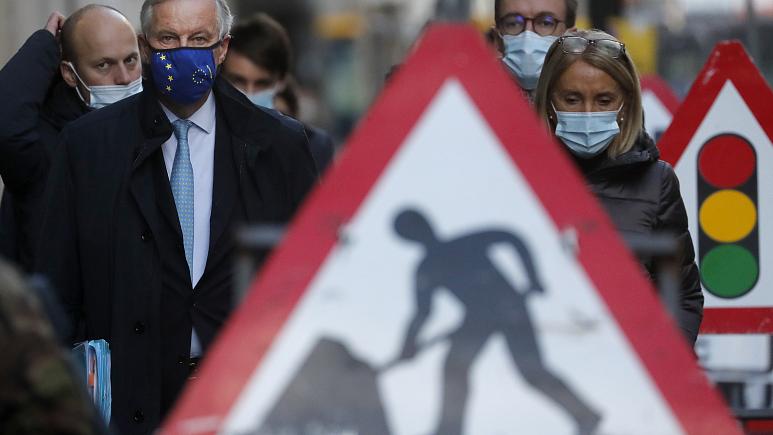
Kepala juru runding Uni Eropa Michel Barnier kembali ke London untuk bertemu juru runding dari Inggris, David Frost, setelah menyelesaikan isolasi mandiri karena sebuah kasus virus corona dalam timnya.
Perundingan masih tersendat seputar isu-isu penting termasuk hak-hak penangkapan ikan dan peraturan kompetisi yang adil, dan Barnier mengatakan bahwa “perbedaan signifikan yang sama, masih berlanjut.”
Inggris meninggalkan Uni Eropa awal tahun ini, tapi masih menjadi bagian dari ekonomi blok itu dalam periode transisi 11 bulan, sementara kedua pihak berusaha merundingkan perjanjian perdagangan baru untuk diberlakukan mulai 1 Januari.
Perundingan telah melampaui pertengahan November, tanggal yang dianggap sebagai tenggat untuk menyepakati perjanjian tepat waktu untuk disetujui dan diratifikasi oleh parlemen di Inggris dan Uni Eropa.
Inggris rencananya akan meninggalkan struktur ekonomi Uni Eropa pada 31 Desember. Apabila perjanjian tak segera dicapai, maka tahun baru akan sangat menyulitkan, dengan adanya penerapan tarif dan hambatan perdagangan lain. Itu akan merugikan kedua pihak, terutama Inggris yang melakukan separuh perdagangan dengan Uni Eropa. [vm/ft]
Seluruh isi berita dalam artikel ini diambil secara utuh dari VOA Indonesia
Even if the EU and the UK succeed at this late, late stage in striking a post-Brexit trade deal, a new race against time will begin.
An agreement needs to be ratified on both sides to ensure it comes into force by January 1 after the transition period expires.
“Crunch” weeks have come and gone, as has Boris Johnson’s mid-October deadline. In June EU negotiator Michel Barnier said a full legal text would be needed “by 31 October at the latest”. Experts in procedure later said agreement would have to be reached by mid-November, and that has passed too.
In football terms, we are now deep into stoppage time and several minutes beyond the number flashing on the touchline electronic board.
Overcoming the familiar obstacles relating to fishing rights, future competition and an enforcement mechanism is likely to require some imagination and a brave political leap.
If a Brexit rabbit is suddenly pulled out of the hat, the UK and especially the EU will then need to pull out all the procedural stops.
EU ratification — not a simple process
On the EU side, an agreement struck by the Commission would need the backing of national leaders in the European Council, and the European Parliament. Michel Barnier has kept national envoys regularly updated on progress during the negotiations, with little sign of disunity.
Firstly, a deal needs to be turned into legal text. This involves a process known as “legal scrubbing”, to ensure it is legally robust. The range of topics expected to be covered is huge: among them trade in goods and services, fishing and farming, aviation, security cooperation, data policy, education and science.
Reports quoting officials suggest a future treaty could run to 1,800 pages — three times the length of the Withdrawal Agreement in the divorce deal that took the UK out of the EU last January.
Translation from English into the EU’s 23 other languages is likely to be a formidable task. However, despite the deadlock on key issues a draft is said to be 95% complete, and it’s thought some translation may be done in advance.
The deal would need ratification from the European Parliament, by a simple majority of all votes cast. MEPs cannot make amendments, yet some have made it clear that they are not going to rubber-stamp an agreement but give it thorough scrutiny.
The parliament can speed up its procedures, by for instance waiving its committee stage which normally produces a report for MEPs with recommendations. However, passing such an important and far-reaching deal in under a month would be a tall order.
The last plenary session of the European Parliament is in mid-December, so MEPs may have to organise a special meeting in the week after Christmas to vote on a deal.
Some policy areas may come under what is known as “mixed” or “shared” competence, meaning subject also to the approval of national and even regional assemblies. Member states can collectively decide to limit ratification to EU level, but several are certain to want to analyse the text in detail including in their parliaments.
After the European Parliament’s consent, the deal would return to the Council to be formally adopted.
UK approval should be easier than last time
Ratification on the British side should be simpler, not least because of the 80-strong majority enjoyed by Boris Johnson’s government. A repeat of the acrimonious parliamentary deadlock that repeatedly delayed Brexit itself is highly unlikely.
By law, the government can ratify a treaty 21 sitting days after it is laid before parliament. The process can be speeded up if necessary. If MPs vote against it, a further 21-day period kicks in. However, under Brexit legislation already passed the government is not obliged to hold a vote.
Further legislation may be needed though to implement an EU-UK treaty. UK parliamentary managers have reportedly been drawing up legislation in anticipation of a deal, in order to get it passed in time for January 1.
What happens if the process runs out of time?
Throughout the autumn, commentators have said time is running out to strike a deal. Commission President Ursula von der Leyen told MEPs on Wednesday (November 25) that these were now “decisive days”.
EU officials have often said that Brussels will not pull the plug on talks, but it may have to announce that ratification is no longer possible by December 31.
Boris Johnson’s government refused an extension to the post-Brexit transition period, which since the summer has been legally impossible anyway under the terms of the divorce deal. One possibility might be for the EU and the UK to agree to apply a deal provisionally, pending ratification.
Much may depend on whether there is any political will to reach an agreement. Otherwise, contingency plans are likely to come into play for a “no-deal scenario”.
Writer: Hendra Manurung is currently pursuing a doctoral degree in international relations at Padjadjaran University, Bandung
Palm oil products are a national strategic product that has contributed greatly to Indonesia’s trade balance and economy amid the COVID-19 pandemic and domestic economic recession conditions.
Oil palm is one of the leading commodities that form the backbone of the national economy. This is because palm oil contributed greatly to the country’s foreign exchange, reaching the US $ 23 billion, or around IDR 320 trillion in 2019. From 1990 to the present, oil palm production is a source of annual income for rural farmers who are scattered throughout Indonesia.
Until the end of 2020, unfortunately, discrimination against the Indonesian oil palm plantation industry and its derivative products was still carried out by a number of anti-palm oil supporters, especially those from European Union countries.
Indonesian Foreign Minister Retno L.P Marsudi stated clearly that the discriminatory actions of the European Union are very contrary to the principles of partnership and collaboration that Indonesia has upheld so far.
Indonesia has always put forward cooperation and emphasized collaboration with various partner countries, but when it comes to national interests, the Indonesian government must be firm. Moreover when it comes to the principles and mutual understanding have been previously agreed with the European Union.
Simply, what Indonesia wants is only one, just treat us fairly.
For Jakarta, the European Union has long been a strategic partner network related to sustainable bilateral trade, where there are common views, many international issues with the European Union. Indonesia always opens communication dialogues openly and intensely. Previously, for some years, Indonesia actually already has a close partnership with the European Union.
In 2019, amidst the onslaught of the negative palm oil campaign in Norway, palm oil turned out to play an important role in achieving the targets of the Sustainable Development Goals in Indonesia. In addition, palm oil is a strategic industry for the Indonesian economy. The collective efforts of the government, business circles, and communities are considered successful in maintaining the sustainability of peat and oil palm lands.
In 2017 Norwegian Parliament issued a resolution to reduce the use of palm oil in biodiesel products circulating in Norway. On the other hand, Indonesia continues to strive for the quality of sustainable palm oil, one of which is through the biodiesel program. Indonesia is also developing technology to convert palm oil into bio-hydrocarbon fuel to produce green diesel, green gasoline, and green aviator.
Rainforest Foundation Norway, an NGO that is critical of environmental policies in Indonesia, actually appreciates the success of environmental conservation in the country recently. This achievement needs to be appreciated; however, a long-term national policy is also needed to maintain good trends in environmental conservation in Indonesia.
Over the past 6 years (2014-2020), Indonesia has succeeded in reducing forest fire hotspots. Indonesia is building a peatland monitoring system technology called the peatland restoration information and monitoring system, which is integrated, scalable, and accessible online.
Most oil palm trees are not a direct cause of deforestation of tropical rainforests in Indonesia. The drastic loss of tropical rainforests was caused by transmigration policies in the 1960s, issuance of Forest Concession Rights in the 1970s, and massive forest fires. Initially, the transmigration commodity was not oil palm, but coffee, cocoa, candlenut, pepper, and other plantation products. However, people tend to compare between past and present, but forget about the historical sequence. In fact, oil palm trees were planted and contributed to the reforestation of deforested forests in the 1980s.
Energy Company ST1 Norway claims that at least 40% of the total biofuel is used in the Nordic region. Unfortunately, deforestation has resulted in palm oil being seriously rejected in Norway. This was confirmed by Nestle Norway, which became the target of Greenpeace’s environmental campaign in 2010. Since then, Nestle has become a member of the Roundtable on Sustainable Palm Oil (RSPO) and targets to use 100% certified palm products by 2020.
In fact, Indonesian oil palm farmers can meet sustainability standards based on ISPO, related to the fertilization system and the use of natural pest killers according to ISPO which has succeeded in increasing production and incomes of farmers. These oil palm farmers consider that ISPO has helped alleviate poverty, such as through assistance efforts to increase the capacity of farmers and eliminate middlemen in the sale of palm oil crops.
Further, talking about palm oil certification, it must come from the country of origin due to representative of the interests of local farmers and industry. The issuance of Indonesian Sustainable Palm Oil (ISPO) palm certification has continued to increase from 2013 to 2018.
The negative campaign attacks were evenly distributed across countries in Europe. The perception of palm oil that continues to deteriorate in Europe is used by a number of companies as a marketing strategy. It is suspected that these companies are only taking advantage of negative palm oil campaigns to pursue profits alone, but do not contribute to biodiversity and sustainability.
The EU also encourages farmers to be more involved in the Indonesian sustainable palm oil (ISPO) scheme, due to the importance of Indonesian oil palm plantations as part of the people’s daily economy.
Indonesia has made a lot of progress in managing sustainable palm oil production, and this progress needs to be sustained in the coming decades.
Furthermore, the discrimination and double standards imposed by the EU are justified by one of the leading members of the European Parliament, Dr. Werner Langen, who is also the head of the Delegation for relations with the countries of Southeast Asia and ASEAN. In his open letter, he expressed his view that palm oil that is produced sustainably should not be categorized as high risk to the environment (Indirect Land Use Change / ILUC high risk), and that the European Commission’s Delegated Act policy was pure protectionist and hypocritical (Indonesian Ministry of Foreign Affairs, March 27, 2019).
The Delegated Act is formulated by the European Commission and brought to the European Union Parliament for a decision. The Delegated Act is considered to be detrimental to Indonesia because it prohibits CPO from being used for fuel or biofuel. In addition, CPO is included in a high-risk commodity.
Basically, the EU does not prohibit palm oil from entering the EU market. It’s just that to meet the Renewable Energy 2030 target, the EU is committed to reducing the use of biofuels that are not environmentally friendly. Thus, to bridge this, the EU is ready for dialogue with Indonesia and other palm oil-producing countries. The statement was conveyed by David Daly from the European External Action Service (EEAS), EU Commission.
A win-win solution is needed in resolving the issue of discrimination by the EU against palm oil which will have negative implications for at least 17 million people involved in the domestic palm oil industry.
Indonesia has a commitment and consistency to continue to increase various efforts to produce sustainable palm oil and will never allow its green land to be destroyed for palm oil. Therefore, Indonesia objects to the EU’s policy through the Delegated Act which categorizes its palm oil products as a commodity that damages the surrounding environment and causes deforestation.
Indonesia and the European Union actually need each other. The investment development of both parties mutually benefits Indonesia and the European Union. In order to solve the problem of Indonesian palm oil, it is clear that relevant standards, credibility, and transparency are needed by Indonesia and the European Union.
Therefore, the issue of Indonesian crude palm oil (CPO) should not interfere with the partnership between Indonesia and the European Union which has been going well over the last 20 years.
In conclusion, Indonesia and the EU should be discussed more intensely joint efforts to improve ISPO, so that ISPO can be accepted by all EU countries that are seriously interested in buying palm oil from Indonesia.
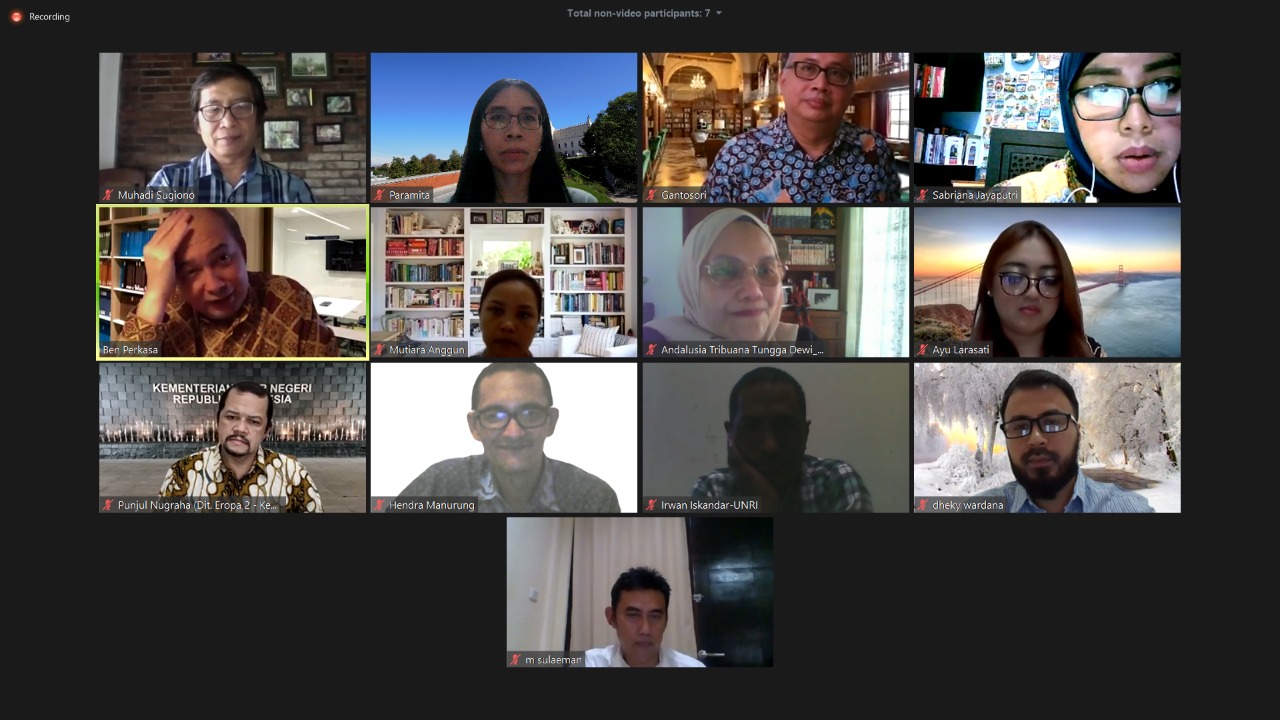
The Policy Analysis and Development Agency of the Indonesian Ministry of Foreign Affairs held a virtual Focus Group Discussion with the theme ‘Potential for Digital Economic Cooperation with Visegrad Countries (Poland, Czech, Slovakia, and Hungary)’, on November 25, 2020.
In this activity, there were four resource persons who presented related topic, i.e.: Indonesian Investment Opportunities to Visegrad Countries in the Digital Economy Sector (Dr. Ben Perkasa Drajat / BPPK Kemenlu); Potential Cooperation in the Digital Economy Sector with the Visegrad Group (Hendra Manurung / Indonesia Community for European Studies); Efforts of Business Actors in the Digital Economy Sector (Bima Laga / Buka Lapak); and the Contribution of the Digital Economy to National Economic Growth (Dheky Wardana / PT. Vensia Event Indonesia). The event attended by around 30 active participants from the Indonesia Community for European Studies and Indonesia Ministry of Foreign Affairs.
After the Cold War (1990), the Visegrad countries which previously joined the Soviet Union Defense Alliance, ‘Warsaw Pact’, decided to join the North Atlantic Treaty Organization (NATO) in March 1999. The Visegrad group was formed on 15 February 1991 in the castle town of Visegrad (Hungary). Then, the four countries together with Lithuania, Estonia, Latvia, Poland, Czech, Hungary, Slovakia, Slovenia, Malta, and Cyprus joined the European Union on May 1, 2004.
The Visegrad countries leaders have always worked together to increase and strengthen cooperation in the political, military, cultural, economic, and energy fields in line with efforts to advance integration into the European Union during the last 16 years (2004-2020).
The FGD activity also discussed the background of the digital economy cooperation between Indonesia and the Visegrad countries; ease of doing business, e-government, e-services, e-commerce, and Indonesia’s outward investment in Visegrad countries and vice versa; Digital Agenda For Europe 2021-2027; the need to optimize the support of the Indonesian government and the Visegrad countries to enhance and strengthen digital economic cooperation through the existence of a clear Master Plan related to the formation of digital economic cooperation; opportunities and challenges that are currently and likely to be faced; clear, transparent, directed and measurable regulations on digital economic cooperation; need the right policy; research and development in the region and internationally; internet penetration preparation; optimizing the role of micro, small and medium enterprises in facing advances in information technology, how to use them in the digital economic sector; as well as preparing Indonesian human resources.
In conclusion, the topic raised in this FGD is interesting and challenging for further elaboration by holding a bigger event in 2021, with inviting Visegrad Ambassadors in Indonesia, policy-makers, scholars, researchers, academics, experts, and students who concern about the future of Indonesia’s digital economy cooperation with the European Union, especially the Visegrad countries.
Badan Pengkajian dan Pengembangan Kebijakan Kementerian Luar Negeri Republik Indonesia menyelenggarakan kegiatan Focus Group Discussion secara virtual mengangkat tema ‘Potensi Kerja Sama Ekonomi Digital dengan negara-negara Visegrad (Polandia, Ceko, Slowakia, dan Hongaria)’, pada tanggal 25 Nopember 2020. Dalam kegiatan tersebut, ada 4 (empat) narasumber yang mempresentasikan paparan terkait: Peluang Investasi Indonesia ke Negara-Negara Visegrad di sektor Ekonomi Digital (Dr. Ben Perkasa Drajat / BPPK Kemenlu); Potensi Kerja Sama di Sektor Ekonomi Digital bersama Visegrad Grup (Hendra Manurung / KIKE); Upaya Pelaku Usaha di Sektor Ekonomi Digital (Bima Laga / Buka Lapak); dan Kontribusi Ekonomi Digital terhadap Pertumbuhan Ekonomi Nasiona (Dheky Wardana / PT. Vensia Event Indonesia). Acara dihadiri oleh sekitar 30 orang peserta aktif dari Komunitas Indonesia untuk Kajian Eropa (KIKE) dan Kementerian Luar Negeri Indonesia.
Seusai Perang Dingin (1990), negara-negara Visegrad tersebut yang sebelumnya bergabung dengan Aliansi Pertahanan Uni Soviet, ‘Pakta Warsawa’, memutuskan bergabung ke Pakta Pertahanan Atlantik Utara (NATO) di Maret 1999. Visegrad grup dibentuk pada 15 Pebruari 1991 di kota kastil Visegrad (Hongaria). Kemudian keempat negara tersebut bersama-sama Lithuania, Estonia, Latvia, Polandia, Ceko, Hongaria, Slovakia, Slovenia, Malta, dan Siprus bergabung pada Uni Eropa pada 1 Mei 2004.
Para pemimpin negara-negara Visegrad ini selalu berupaya untuk bersama-sama bagaimana meningkatkan dan menguatkan kerja sama di bidang politik, militer, budaya, ekonomi dan energi seiring upaya memajukan integrasi ke dalam Uni Eropa selama 16 tahun terakhir ini.
Dalam kegiatan FGD juga dibahas latarbelakang kerja sama ekonomi digital Indonesia dan negara-negara Visegrad; ease of doing business, e-government, e-services, e-commerce, dan outward investment Indonesia di negara-negara Visegrad dan vice versa; Digital Agenda For Europe 2021-2027; perlunya optimalisasi dukungan pemerintah Indonesia dan negara-negara Visegrad untuk meningkatkan dan menguatkan kerja sama ekonomi digital melalui adanya Master Plan yang jelas terkait pembentukan kerja sama ekonomi digital; peluang dan tantangan yang sedang dan kemungkinan besar akan dihadapi; regulasi kerja sama ekonomi digital yang jelas, transparan, dan terarah, dan terukur; perlu kebijakan tepat; research and development di kawasan maupun internasional; persiapan penetrasi internet; optimalisasi peran usaha mikro, kecil, dan menengah menghadapi kemajuan teknologi informasi, bagaimana pemanfaatannya pada sektor ekonomi digtal; serta penyiapan sumber daya manusia Indonesia.
Disimpulkan, topik yang diangkat dalam Focus Group Discussion ini menarik untuk dielaborasi lebih lanjut dengan mengadakan acara lebih besar di 2021 mengundang Duta Besar negara-negara Visegrad, policy-makers, penggiat, peneliti, akademisi, pakar, dan mahasiswa, yang peduli pada masa depan kerja sama ekonomi digital Indonesia dengan Uni Eropa, khususnya negara-negara Visegrad.
18 November 2020 – KIKE (Komunitas Indonesia untuk Kajian Eropa) bersama dengan Fakultas Ilmu Sosial dan Ilmu Politik Universitas Brawijaya menyelenggarakan kegiatan Webinar Nasional yang “ke-2” pada tahun ini akan diselenggarakan selama 2 hari dengan berisikan 1 Webinar Pembuka dan 6 Panel. Webinar yang dihadiri hampir 800 peserta ini dapat terselenggara dengan sukses salah satunya atas dukungan partnership seperti UBL TV, yang membantu dalam proses publikasi.
Webinar ini dihadiri oleh Duta Besar Uni Eropa untuk Indonesia dan Brunei Darussalam, Ketua Umum KIKE, Dekan Fakultas Ilmu Sosial dan Ilmu Politik Universitas Brawijaya, Ketua Prodi Hubungan Internasional Universitas Brawijaya, dan akademisi lainnya. Webinar dibuka oleh Bapak Muhadi Sugiono selaku Ketua Umum Komunitas Indonesia untuk Kajian Eropa yang kemudian dilanjutkan oleh kata sambutan dan penyampaian materi yang diberikan oleh Mr. Vincent Piket selaku Duta Besar Uni Eropa untuk Indonesia dan Brunei Darussalam yang sangat mendukung diselenggarakannya kegiatan ini. Materi yang diberikan oleh Duta Besar Mr. Vincent Piket membicarakan banyak sektor mengenai Uni Eropa, sehingga diharapkan mampu memberikan wawasan baru untuk seluruh peserta webinar yang hadir. Selain itu, Bapak Muhadi Sugiono, selaku Ketua Umum KIKE, mendapatkan kesempatan untuk memaparkan materi, yang salah satunya adalah membahas European Integration Theory.
Webinar ini juga menjadi perkenalan awal hasil tulisan yang ditulis oleh akademisi dari gabungan beberapa Universitas di Indonesia yang tergabung dalam KIKE (Komunitas Indonesia untuk Kajian Eropa), yang nantinya akan dibukukan dan akan menjadi sebuah buku yang menarik untuk dibaca dan dipahami bagi setiap akademisi yang berfokus pada Kajian Eropa.
Diharapkan dengan diadakannya webinar ini, akan membuka wawasan kepada seluruh peserta yang telah hadir dalam webinar perihal isu-isu yang berkembang di Kawasan Eropa, baik dalam sektor ekonomi, politik, dan sosial. Sehingga semakin banyak akademisi dan mahasiswa yang tertarik kepada Kajian Eropa.
His Excellency Mr. Vincent Piket menjelaskan secara umum bahwasanya, minggu yang krusial untuk UK setelah brexit, dan menjelaskan secara merinci mengenai kondisi beserta penjelasan dampak kepapda EU pasca brexit yang terjadi, salah satunya bagi seluruh masyarakat di 27 Negara EU, bagaimana system dari berbagai aspek yang sebelumnya berjalan pada dasar dan prinsipnya mulai dari ekonomi, politik, sosial, lingkungan, budaya, dan aspek lainnya menjadi begitu sangat berubah drastic dan setiap Negara EU diharuskan untuk beradapasi pada perubahan ini. Menurutnya, kejadian ini merupakan sebuah keadian yang mengejutkan banyak pihak dan banyak yang tidak menginginkan hal ini terjadi, tetapi memang harus di terima oleh banyak pihak dengan lapang dada dan terus menatapnya baik dan berorientasi pada solusi positif untuk kondisi yang lebih baik dan kembali stabil. Dan Ia juga memastikan bahwa dengan keadaan yang berubah seperti ini, mereka akan tetap melanjutkan langkah kerja sama, koordinasi, dan menjalin relasi yang baik dalam berbagai bidang, ekonomi, lingkungan, politik, social dan juga salah satunya lebih rinci pada kerja sama lingkugnan dan penanganan permasalahan terorisme, dan lain-lainya.
Bapak Muhadi Sugiono menjelaskan mengenai teori integrasi Eropa dan Brexit, beliau membahas ini dikarenakan banyak sekali pihak melihat permasalahan ini dari berbagai spekulasi dan berbagai pandangan yang beragam. Beliau juga menjelaskan relevansi brexit sebagai isu atau permasalahan yang ada dengan prinsipal sebuah teori di dalam hubungan internasional yaitu teori integrasi. Dan beliau juga menambahkan bahwa Integrasi Eropa berhasil memimpin pembangunan sebuah teori integrasi. Selain itu, di dalamnya, beliau menjelaskan beberapa komponen pembahasan diantaranyaa; penjelasan umum perihal adanya pernyataan mengenai disentegrasi EU, selanjutnya narasi umum mengenai EU, dan Teori Integrasi Eropa. kontekstualisasi brexit, dan masih banyak lagi penjelasan lainnya. Selain itu, Bapak Aswin memaparkan konteks Uni Eropa dari sudut pandang non-european. Secara khusus beliau membahas bagaimana dinamika dan prospek hubungan EU dan Tiongkok.