INDONESIA – UK COOPERATION POST BREXIT: CHALLENGES & OPPORTUNITIES


Source: https://thejakartapost.com/

Writer: Hendra Manurung (Hendra Manurung is currently pursuing a doctoral degree in international relations at Padjadjaran University, Bandung)

Brexit has made Britain will be more open to the world and independent, particularly in implementing its foreign policy from London, and mostly in strengthening closer relations with other countries, including with Indonesia continuously.

Britain’s exit from the European Union made it more globalized. The global UK means new relations with the European Union and closer bilateral relations with other countries, including Indonesia

Post-Brexit in June 2016, the UK is one of the important trading partners in Europe and a major foreign investor in Indonesia.

Brexit offers enormous economic opportunities for Indonesia after officially left the European Union on 31 January 2020, after forty-seven years joining since 1973.

It was after being delayed four times. The decision was very historic for the government of British Prime Minister Boris Johnson due to his success in realizing the British people’s decision in the Brexit referendum on 23 June 2016.

It reflects the will of the majority of UK citizens and is bound to create a new economic and political order in the UK and Europe.

Previously, the European Parliament approved the agreement to withdraw Britain from the European Union (Brexit) on 31 January 2020. However, the parliament warned that Britain should not make too many demands related to negotiations on economic affairs on the grounds of maintaining good relations in the future.

Despite concerns, there will be economic turmoil in Europe during the transition period for Britain’s exit from the European Union at the end of 2020. During the transition period, Britain and other EU countries will continue to apply the same business rules to try to negotiate a broader trade agreement.

England is an important priority for strengthening Indonesia’s economic diplomacy in the European region. The two countries agreed to increase economic cooperation in potential fields such as trade and investment, creative industries including digital technology in the financial sector mostly financial technology, energy, especially renewable energy, education and human resource development, maritime, and others.

This was stated during the visit of the British Minister for the Asia Pacific, Heather Wheeler to Jakarta in January 2020, which is seen as a reaffirmation of both commitment to partnership and friendly relations between Indonesia and the UK (Kemlu.go.id, 14/1/2020). Apart from bilateral issues, efforts to strengthen bilateral cooperation of the two countries were also discussed on global and regional issues of mutual interest.

It is a very good signal to boost the intensity of mutual beneficial cooperation in both countries in various fields in order to achieve economic growth and people’s welfare. Minister Heather Wheeler’s visit to Indonesia is the first time since taking office since July 2019.

This is important in relation to how to improve bilateral trade performance, including investment and education through the Trade Review mechanism. This is a concrete step in preparing comprehensive economic cooperation between both countries after Brexit in June 2016, so that it can provide greater economic benefits for the two countries.

Post-Brexit, Britain will no longer be bound by European Union rules in developing closer relations with other countries. Thus, the UK is able to more freely increase the volume of trade with Indonesia from both directions.

After Brexit, Britain can strengthen economic cooperation with Indonesia, reduce trade barriers such as tariffs, and so on, and expand market access between the two countries.

For twenty years Britain was the largest importer of Indonesian timber among the European Union countries.

Post-Brexit, the UK will continue to import according to the FLEG-T VPA scheme or an agreement between the European Union and Indonesia regarding the sale of sustainable timber in accordance with the regulations of the buying European country.

Britain and Indonesia are already doing business on WTO terms, so trade relations between the two countries remain the same even after Brexit. The two countries have signed an agreement similar to the EU treaty on legal timber, to ensure sustainability. This was followed by launching a Joint Trade Review, to find out where future opportunities together lie.

Brexit has also provided an opportunity for Britain to open up again to immigrants from other countries. Recently the UK implemented a policy that allows international students to live and work for two years after completing their studies in Western European countries.

The positive impact of Brexit will benefit Indonesia in the trade sector. This is because the export opportunities for business actors are increasingly open, especially CPO commodities to the UK and they no longer depend on the European Union.

The negative impact is that the economy of the Blue Continent will be depressed. Under these conditions, it will automatically have an impact on Indonesia because the European Union’s demand for domestic products will decrease.

Indonesia perceives that in this Brexit situation, of course, Great Britain must rebuild all its trade relations with many countries again, because previously it could be in unity with the European Union. So this is also an opportunity and opportunity for Indonesia or other countries that have traditionally traded with the European Union.

Apart from Brexit, there is some geopolitics development in the world which might also raise concerns in the Indonesian national economy. Among them are the outbreak of COVID-19 throughout the world, the trade war between the US and China, COVID-19 pandemic and the discovery of the vaccine, decline of global multilateralism, and the risk of US geopolitical competition with its allies with Iran, Syria, and Russia in the Middle East. Thus, Indonesia and Britain should always be aware of these dynamics of world economic growth.

The spread of the Coronavirus has a more dangerous impact on the economy than Britain’s departure from the European Union or Brexit. Up to the present time, still, there has been no definite effort to control the outbreak of viruses originating from Wuhan, China at the end of December 2019.

Obviously, it is clear that there will be real differences indirect positive trade relations between Indonesia and the UK, compared to trade relations that tend to be conventional as has been done together with the European Union.

“No country is able to overcome this crisis alone. In this connection, we have no other option but to count on the WHO to be a platform of cooperation among countries,” stated by Retno L.P Marsudi, Indonesian Foreign Minister at the Video Conference Ministerial Meeting for Alliance for Multilateralism.

WEBINAR EU27: Uni Eropa Pasca Brexit

KOMUNITAS INDONESIA UNTUK KAJIAN EROPA (KIKE) MENGUNDANG ANDA

Pada Webinar Nasional
“EU 27 : UNI EROPA PASCA BREXIT”

Rabu-Kamis,18 – 19 November 2020
Pukul 09:00 – 16.00 WIB
Via zoom

Pembicara Utama :
H.E. Vincent Piket
(Duta Besar Uni Eropa untuk Indonesia & Brunei Darussalam) I
Head of EU Delegation
“EU Response toward Brexit”

Aswin Ariyanto Azis, S.IP., M.DevSt.
Pengkaji Studi Kawasan Eropa
Ketua Prodi Hubungan Internasional Universitas Brawijaya
“Brexit dari Kacamata Non-European (Asia ; ASEAN)”

Muhadi Sugiono, M.A.
Ketua Umum KIKE
“EU27 Pasca Brexit: Overview”

Webinar terdiri dari seminar pembuka dan 6 panel seminar pendukung yang menghadirkan 20 Akademisi dengan sub-tema sebagai berikut:
– Brexit dan Eksistensi Uni Eropa
– Transformasi Governance Uni Eropa
– Hubungan Internasional Uni Eropa

Forum terbuka untuk umum.
Segera registrasi melalui : http://bit.ly/WebinarEU27

Sampai bertemu di webinar!

Instagram Kami: kike_ices


Dear Colleagues and Friends,

Indonesian Community for European Studies (ICES)
Invites you to a National Webinar entitled:

“EU27: European Union Post Brexit”

Which will be held on
Wednesday-Thursday, November 18th-19th 2020
at 08.30 am – 04.00 pm (Jakarta Time)
via Zoom

Our Main Speaker:
H.E. Vincent Piket
EU Ambassador to Indonesia & Brunei Darussalam
Head of EU Delegation
“EU Response toward Brexit”

Aswin Ariyanto Azis, S.IP., M.DevSt.
Head of International Relations Department University of Brawijaya
“Brexit from Non-European Perspectives”

Muhadi Sugiono, M.A.
Chairman of ICES
“EU 27 After Brexit Overview”

There’re also 6 panels with 20 speakers supporting various sub-themes in European Studies, including:
– Brexit and the Existence of the European Union
– European Union Governance Transformation
– European Union International Relations

This event is open to the public.
Register now through this link: http://bit.ly/WebinarEU27

We’re looking forward to your participation.

Instagram: kike_ices

PURSUING SUSTAINABLE COOPERATION: INDONESIA – EFTA CEPA (IE-CEPA)


https://www.gatra.com/

Writer: Hendra Manurung (Hendra Manurung is currently pursuing a doctoral degree in international relations at Padjadjaran University, Bandung)

The European Free Trade Association or EFTA is an inter-governmental organization established to promote free trade and economic integration for the benefit of its member countries (Switzerland, Norway, Liechtenstein, and Iceland) and their partner countries.

Indonesia and the EFTA Comprehensive Economic Partnership Agreement (IE-CEPA) is a comprehensive trade agreement due to both markets access inclusiveness, trade and investment facilitation, and capacity building cooperation.

IE-CEPA signed on 16 December 2018 in Jakarta. It is expected that through the Comprehensive Economic Partnership Agreement signed by Indonesia and the European Free Trade Association will bring many mutual benefits for both sides in the future.

The IE-CEPA agreement itself suppose will boost market access to EFTA for fishery products, industry such as textiles, furniture, bicycles, electronics, and auto tires, and agriculture including coffee and palm oil.

The Ministry of Trade of Indonesia also held a Roadshow for the Indonesian Trade Agreement with EFTA countries related to the Comprehensive Economic Partnership Agreement that was completed in Makassar, South Sulawesi (http://ditjenppi.kemendag.go.id/, 26/9/2019).

For Indonesia, the European Free Trade Association (EFTA) considered as the 23rd group of non-oil and gas export destination countries and the 25th largest country of origin for non-oil and gas imports.

After going through nine complex stages that took almost 8 years, began in January 2011 to Nov. 23, 2018, finally conclude. The IE-CEPA negotiations were finally declared substantively completed by the negotiators through Joint Announcement at a meeting in Denpasar, Bali from October 29 to November 1, 2018.

Thereafter, with the signing of the IE-CEPA, a new milestone in bilateral relations between Indonesia and the EFTA countries has begun. This is due to a number of benefits that Indonesia and EFTA will get, through the IE-CEPA agreement which was declared in Geneva, Switzerland on 23 November 2018.

The IE-CEPA Agreement benefits for Indonesia are enormous due to Indonesia’s market access expansion to EFTA countries and accelerating the competitiveness quality of Indonesian products.

The cooperation between the five countries, involving Indonesia, Switzerland, Iceland, Norway, and Liechtenstein will not harm each other. In fact, there are many benefits that can be obtained, particularly with the zero-tariff policy which is applied to almost 99 percent of Indonesian products exports to EFTA countries.

The Indonesian Ministry of Foreign Affairs virtually is intensifying discussions on the ratification of the Indonesian Agreement – the European Free Trade Association (EFTA) Comprehensive Economic Partnership Agreement (IE-CEPA) in the Tourism Services Sector in October 22, 2020 (kemlu.go.id, 27 Oct. 2020).

In the goods sector, Indonesia benefits from almost 99 percent zero tariffs. Even so, this was done in stages with various deadlines.

In detail, there were also tariff eliminations on 6,333 tariff posts or about 90 percent of the total Norwegian tariff posts. This figure covers 99.75 percent of the value of Norwegian imports from Indonesia.

Tariff elimination also occurred at 8,100 tariff posts in Iceland or around 94.28 percent of the total existing tariff posts. This figure covers 99.94 percent of Iceland’s import value from Indonesia.

There is also the elimination of tariffs on 7,042 tariff posts in Switzerland or about 81.74 percent. This figure covers 99.65 percent of the Swiss import value from Indonesia.

Indonesian export products that receive preferential rates include palm oil, fish, gold, footwear, coffee, toys, and textiles. There is also furniture, electrical equipment, machinery, bicycles, and tires.

Profits in the service trade sector also vary. Starting from the cross border where Indonesian citizens will get information and education from a distance. Indonesia can also increase the growth of e-commerce in the country and for the needs of exports abroad by optimally utilizing digital platforms.

On the consumption abroad section, the Indonesian tourism sector benefits from an increase in the number of tourists from EFTA member countries. Not to mention, the increase in capital flows from EFTA member countries to Indonesia will boost the pace of infrastructure development.

For the commercial presence, it will be increasing capacity building for generating Indonesian human resources quality through the presence of EFTA experts. An increase in the number of Indonesian workers also will be sent to EFTA countries.

Indonesian workforce certification will also be recognized by EFTA countries. Open market access for workers openly is accessible in the category of Intra Corporate Trainee, Trainee, Contract Service Supplier, Independent Professional, and Young Professional.

Indonesian product opportunities in the EFTA market are also promising and challenging. The results of the analysis of Indonesia’s potential exports with the EFTA countries (ITC, 2018) highlighted that these products with the greatest export potential from Indonesia to Switzerland are jewelry from precious metals, coffee, and footwear.

Additionally, Indonesia has the highest supply capacity for palm oil. On the other hand, the product with the strongest potential demand in Switzerland is immunology.

Products with the greatest export potential from Indonesia to Norway are nickel matte, sports footwear, and coffee. Indonesia also has the highest supply capacity for seats of cane, osier & similar products, while the product with the strongest potential demand in Norway is nickel matte.

Products with the greatest export potential from Indonesia to Iceland are shrimp, crude coconut oil, and coffee. Indonesia also has the highest supply capacity for palm oil & fractions, while motorized vehicles to transport people are the product with the strongest potential demand in Iceland.

On the investment side, this cooperation is profitable. IE-CEPA is expected to create an open, stable, and predictable business climate for investors. Increased investment will open wider opportunities for the business world, creating jobs that will improve people’s social welfare gradually.

Investments from developed countries will also have a positive impact in terms of technology and knowledge transfer, so as to increase the competitiveness of domestic commodity products and services in the international market.

The investment sectors offered by Indonesia to EFTA through IE-CEPA include fisheries, agriculture, and manufacturing of food products, textiles, chemicals, pharmaceuticals, and domestic renewable energy development.

For consumers, the elimination of these tariffs will certainly make the price of goods cheaper and of higher quality. Product choices are increasingly diverse.

Moreover, domestic business actors will also benefit more from the import duties for imports of capital goods and raw materials.

Trade facilitation commitments are also included in the IE-CEPA agreement, which will make trade regulations and customs procedures simpler and more transparent.

To conclude, with the lower prices of domestic raw materials, production costs can be reduced optimally, thereby increasing the competitiveness of various Indonesian exporting products and services abroad. (Hendra Manurung is currently pursuing a doctoral in international relations at Padjadjaran University, Bandung)

INDONESIA – VISEGRAD COUNTRIES ECONOMIC COOPERATION

Writer: Hendra Manurung (Hendra Manurung is currently pursuing a doctoral degree in international relations at Padjadjaran University, Bandung)

https://www.dw.com/
https://www.dw.com/

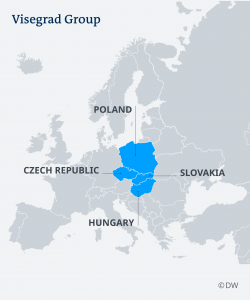
Indonesia attempted to boost the potential for cooperation with four Visegrad countries on 8 October 2019. The Visegrád group which is called the Visegrád Four or V4 is a sub-regional organization of Central Europe which consists of four countries, namely Czech, Hungary, Poland, and Slovakia.

The Visegrad countries group cooperation began on 15 February 1991. The V4 group is substantially formed to further strengthen economic and political integration within the European Union.

Vice Indonesia Foreign Minister, Fachir stated at the 2019 Indonesia-Visegrad Group Business Forum in Serpong, 17 October 2019, in the sidelines of the 2019 Trade Expo Indonesia: “Strong relationship among the Indonesian and V4 business actors will affirm Indonesia’s existence in the region that is deemed strategic as a trading hub that connects West Europe, Central Europe, and East Europe.” (https://kemlu.go.id/).

Business forum activities are one of the priority programs of President Joko Widodo’s vision to further strengthen economic diplomacy.

The economic interaction between Indonesia and the Visegrád region so far is still very limited, even though with an average economic growth of above 4 percent, the countries in this region have great potential for cooperation.

The prospect of cooperation with Visegrád countries is considered to be more promising with their rapid economic growth at an average of 4.1 percent, far above the average economic growth of the European Union (EU) which is approximately 2 percent.

The combined economic size of the V4 countries is equivalent to that of the 5th largest economy in Europe, and through the Visegrád Group, these four countries have an increasingly prominent bargaining position within the EU.

The magnitude of the economic potential of Central Europe has not been fully explored by Indonesia. For this reason, the Indonesia-Visegrád Business Forum will be an excellent opportunity for Indonesia to learn about and take advantage of opportunities for economic cooperation in the four countries, as well as to find solutions to some of the challenges it faces.

However, both sides keep optimistic and positively regarding the value of exports and imports between Indonesia and the V4 countries that accumulatively kept increasing during the last five years (2014-2019), with bilateral trade volume reaching US$ 1 billion in 2018.


In mid of October 2019, the business forum held and attended by 55 Indonesian companies and 48 companies from Visegrad countries which emphasize several elements that could be synergized continuously, namely technological advances, labor, and market size.

The business forum activities were then filled with business matching events between Indonesian entrepreneurs and V4 countries, most of who are engaged in food, apparel,  assembly, information technology, pharmaceuticals, human resources, energy, and infrastructure.

It can be done through increasing Indonesian manufactured products export. The volume of trade that has been achieved between Indonesia and the four Visegrád countries is equal to US$ 1 billion US dollars in 2018 (Antaranews.com, 8/10/2020).

Suppose Indonesian entrepreneurs and V4 countries’ strong partnership will further strengthen Indonesia’s foothold in the European region. Visegrad is considered strategic as a trade center hub connecting Western Europe, Central Europe, and Eastern Europe.

The Indonesian government also encourages the labor and technology services sector to be developed in economic cooperation with Visegrad countries.

This relation also aims to enhance cooperation in the sector indicated by the signing of six memorandums of understanding (MoU) by the Indonesian company and its partners from Visegrad, for the provision of professional and skilled labor on the sidelines of the Business Forum Indonesia-Visegrad in 2019.

Increased sector cooperation was represented by the signing of six memorandums of understanding (MoU) by Indonesian companies and their partners from Visegrad, to provide a professional and skilled workforce.

At the signing of the MoU, everything was about human resources related to work services due to Visegrad countries necessary.

As a group whose economy is driven by the industrial sector, including the automotive and shipbuilding, the four Visegrad countries, especially Hungary and Poland which had been employing workers from Indonesia.

The number of Indonesian workers, so far, is still small, only reaching hundreds of people. However, Indonesian workers are considered to have advantages over a number of workers who come from other ASEAN countries.

In general, Indonesian workers are considered to have a good character who is more loyal and professional, and a number of companies that employ them in Poland and Hungary are more comfortable with the presence of Indonesian workers in their countries.

Workshop Penyusunan Publikasi Uni Eropa Pasca Brexit
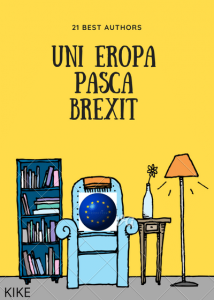
Ilustrasi cover buku

Keluarnya Inggris dari Uni Eropa masih menjadi kajian yang menarik untuk dianalisa bersama. Terdapat berbagai aspek yang perlu dievaluasi atau bahkan diprediksi untuk melihat masa depan kawasan ini dengan Uni Eropa sebagai aktor suprastruktural yang mengelola 27 negara anggotanya.
Oleh karena itu, pada hari Selasa, 12 Mei 2020 yang lalu, diselenggarakan Workshop untuk merancang publikasi ilmiah yang dapat berkontribusi pada kajian Uni Eropa. Workshop dengan tema ‘Peluang dan Tantangan Uni Eropa Pasca Brexit’ ini dilaksanakan melalui media daring. Kegiatan ini berhasil menghadirkan 21 peserta berasal dari berbagai latar belakang profesi dan institusi.

Dalam sambutan pembukaannya, Ketua Umum KIKE, Muhadi Sugiono berterimakasih atas komitmen para akademisi dan praktisi dalam menyusun publikasi ilmiah ini. Karya ilmiah ini diharapkan tidak hanya dapat menjadi luaran pribadi, namun juga dapat menjadi referensi buku ajar pada studi Kawasan Eropa di berbagai universitas di Indonesia. Tersebarnya karya ilmiah di kalangan praktisi dan khalayak umum juga akan menjadi prestasi sendiri dimana itu berarti kajian Eropa perlahan mendapat tempat dan perhatian di masyarakat. Kesadaran terhadap pentingnya Kajian ini diharapkan dapat tumbuh dan mewarnai kajian-kajian lain yang telah ada sebelumnya.
Workshop ini terbagi menjadi beberapa sesi. Sesi pertama berupa pemaparan draft tulisan dari masing-masing peserta. Selanjutnya para dewan pakar KIKE diberikan kesempatan untuk memberikan masukan atas presentasi tersebut. Hendra Manurung selaku ketua Dewan Pengawas dan Muhadi Sugiono secara bergantian memberikan masukan spesifik bagi peningkatan kualitas tulisan. Di akhir acara, sosialisasi terkait sistematika penulisan dan pengutipan disampaikan agar tulisan tersusun dalam format yang sama.

Seluruh tulisan ini nantinya akan disusun dalam tiga kategori tema bahasan. Pertama, yaitu bab Brexit dan Eksistensi Uni Eropa. Pada bab kedua, akan mengupas tentang Transformasi Governance Uni Eropa. Di bagian akhir, Hubungan Internasional Uni Eropa diprediksi dari berbagai sudut pandang.
Karya ini direncanakan rampung pada bulan Juni 2020 dan diharapkan dapat dinikmati pembaca sebelum tahun 2020 berakhir.(fvi)

Rancang Awal Kerjasama Kemitraan Penelitian Dan Pengkajian Kebijakan Luar Negeri Republik Indonesia Untuk Kawasan Eropa
Pembahasan rancangan kerjasama kemitraan antara KIKE dan BPPPKK Kemlu RI

Audiensi KIKE ke kantor Badan Pengkajian dan Pengembangan Kebijakan Kementerian Luar Negeri Republik Indonesia (BPPK Kemlu RI) di Jakarta pada bulan Desember 2019 yang lalu membuahkan hasil yang positif dan ditindaklanjuti oleh BPPK dengan menawarkan kerjasama penelitian dan pengkajian dalam bentuk kemitraan yang dibahas bersama di Yogyakarta.

Pengurus KIKE Muhadi Sugiono (Ketua), Mutia Hariati Hussin (Sekretaris), dan Elistania (Bendahara) serta anggota KIKE Ali Muhammad menerima kehadiran perwakilan BPPK Kemlu RI pada 7 Februari 2020. Ketua Pusat Pengkajian dan Pengembangan Kebijakan Kawasan Amerika dan Eropa BPPK Kemlu RI, Ben Perkasa Drajat, didampingi tiga orang staf, secara langsung membahas agenda kerjasama di sekretariat KIKE. Pada pertemuan tersebut kedua pihak menyepakati kemitraan dalam rangka memberikan sumbangsih pemikiran untuk perumusan kebijakan luar negeri Indonesia. Selain itu potensi pengembangan kemitraan dalam bentuk kegiatan pendidikan/pengajaran, penelitian/pengkajian ilmiah dan pengabdian kepada masyarakat mengenai isu-isu hubungan internasional, khususnya di wilayah Eropa.

Pertemuan juga menyepakati disusunnya nota kesepahaman (MoU) sebagai kerangka legal yang mendasari kerjasama. Nota Kesepahaman ini dapat menjadi pijakan untuk kerjasama lanjutan dimasa yang akan datang. Kerjasama yang direncanakan akan berlangsung dalam kurun waktu dua tahun ini diharapkan memberikan kontribusi strategis bagi pencapaian kepentingan Indonesia di kawasan Eropa (fvi)

Audiensi Perdana Pengurus KIKE

Sejak resmi dideklarasikan pada 25 April 2019, Komunitas Indonesia untuk Kajian Eropa (KIKE) mulai menyusun dan merealisasikan sejumlah program kerja. Salah satu program kerja yang menjadi prioritas dari pengurus baru KIKE adalah melaksanakan audiensi ke sejumlah lembaga strategis. Kunjungan ini diharapkan dapat mengenalkan KIKE dan menjadikan KIKE sebagai mitra strategis lembaga-lembaga tersebut dalam bidang pendidikan, penelitian, perumusan kebijakan, dan lain-lain.

Drs.Muhadi Sugiono, M.A. selaku ketua KIKE mengawali rangkaian audiensi pada 12 Desember 2019 dengan mengunjungi Kementerian Luar Negeri Republik Indonesia. Lembaga negara ini memegang peranan paling penting dalam pencapaian kepentingan Indonesia di luar negeri. Plt. Juru Bicara Kementerian Luar Negeri, Teuku Faizasyah menerima langsung kunjungan tersebut dan menyambut positif kehadiran komunitas epistemik yang memiliki konsern pada kawasan Eropa dan Uni Eropa ini. Dengan kondisi yang masih tegang antara Indonesia dengan UE terkait isu kelapa sawit, Kehadiran lembaga seperti KIKE dianggap penting dalam mendukung pemerintah dalam mengkaji dan mempersiapkan langkah-langkah yang tepat dalam penanganannya. Tentu saja terhadap isu lainnya, keberadaan lembaga Think Tank Eropa pertama di Indonesia ini membuka peluang besar pada kerjasama di masa yang akan datang.

Pengurus KIKE bersama Dubes UE untuk Indonesia beserta staf

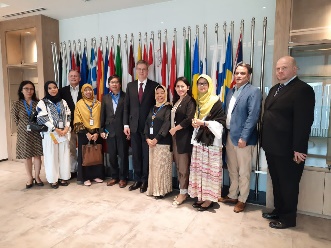
Masih pada hari yang sama, Duta Besar Uni Eropa (UE) untuk Indonesia, Vincent Piket beserta staf menerima enam pengurus inti KiKE di kantornya di kawasan Jl.Jend.Sudirman, Jakarta. Bagi KIKE, lembaga ini adalah lembaga terpenting kedua setelah Kementerian Luar Negeri RI yang menjadi pusat kajian dan kerjasama terkait isu-isu di Eropa dan Uni Eropa khususnya. Piket mengharapkan KIKE dapat menjadi jembatan bagi Uni Eropa dalam pelaksanaan sejumlah program kerja mereka. Pertemuan ini juga membuka peluang inisiasi bagi KIKE ketika ingin membangun kerjasama di luar program yang telah dirancang UE.

Kunjungan akhir ditutup dengan diterimanya pengurus KIKE oleh Ben Perkasa Drajat, Kepala Badan Pusat Pengkajian dan Pengembangan Kebijakan Kawasan Amerika dan Eropa Kementerian Luar Negeri Republik Indonesia (BPPPKK Amerop Kemlu RI). Badan ini yang secara spesifik merumuskan sejumlah rekomendasi kebijakan luar negeri Indonesia terhadap kawasan Amerika dan Eropa. Dalam pembicaraan diketahui BPPPKK Amerop Kemlu RI telah pernah menjalin kerjasama mandiri dengan Universitas Bina Nusantara Universitas Brawijaya, Universitas Budi Luhur, dan Universitas Gadjah Mada, Universitas Moestopo Beragama, dan Universitas Muhammadiyah Yogyakarta dalam kegiatan pendidikan.Universitas-universitas ini merupakan homebased para pengurus KIKE. Dengan mengetahui keberadaan KIKE, BPPPKK merasa sangat terbantu dalam upaya mengoptimalkan kajian Eropa di Indonesia. BPPPKK secara konkrit bermaksud menindaklanjuti pertemuan tersebut dengan kerjasama yang lebih strategis.

Pengurus KIKE bersama Ketua BPPPKK Amerop Kemlu RI dan staf

Rangkaian kunjungan ke tiga institusi di atas memberi aura optimis bagi perjalanan KIKE di masa yang akan datang. Kehadiran KIKE diharapkan dapat memajukan kajian Eropa secara umum dan Uni Eropa secara khusus dengan beragam perspektif yang kaya dari pengkaji Indonesia yang berasal dari berbagai latar belakang. Kehadiran para pengurus dan anggota KIKE yang berasal dari kalangan akademisi, praktisi, pengusaha, jurnalis yang tertarik menggali Eropa lebih dalam bukan tidak mungkin membuat ‘jarak’ antara Indonesia dan Eropa semakin tipis dan menjdi lebih strategis. (fvi)

KIKE Webinar Series 1
Webinar Regionalism and Global Pandemics: Comparative Perspectives of Southeast Asia, Europe and Latin America

Regionalisme dan Pandemi Global: Perspektif Komparatif Asia Tenggara, Eropa dan Amerika Latin

Pandemi Covid-19 mengubah secara drastis perkembangan hubungan internasional yang dimotori oleh globalisasi yang ditandai dengan semakin terbukanya batas-batas negara, semakin tingginya tingkat mobilitas barang, jasa dan orang serta, menurut banyak orang, semakin tidak relevannya kedaulatan. Ancaman penyebaran virus Covid-19 seolah membalik semua ‘kemajuan’ yang dicapai oleh umat manusia ini dan mengembalikan kepada negara semua otoritas yang dianggap semakin berkurang, jika bukan hilang. Hampir semua negara merespon ancaman Covid-19 dengan kebijakan-kebijakan yang berorientasi ke dalam (inward looking) dan unilateral. Sekalipun menjadi strategi yang membantu penanganan krisis dalam jangka pendek, dalam jangka panjang strategi yang berbasis nasional ini jelas jauh dari memadai: bukan hanya untuk mengatasi pandemi tetapi juga konsekuensi sosial, ekonomi maupun poltitiknya. Ancaman Covid-19 dan krisis yang diakibatkannya menuntut kerjasama internasional yang lebih erat. Tetapi, sementara kerjasama global tidak menunjukkan perkembangan yang menggembirakan, negara-negara perlu memberikan perhatian yang serius kepada kerjasama regional yang selama ini telah terbentuk dan relatif berjalan dengan baik.
Webinar ini dimaksudkan untuk mengeksplorasi kerjasama regional di Asia Tenggara (ASEAN), Eropa (Uni Eropa) dan Amerika Latin (UNASUR/MERCOSUR) dalam merespon pandemi Covid-19 serta konsekuensi yang ditimbulkannya dengan menjawab pertanyaan-pertanyaan berikut.
1. Apa dan bagaimana respon organisasi regional terhadap Covid-19?
2. Apakah organisasi regional memiliki mekanisme untuk menangani ancaman penyakit menular setelah munculnya ancaman-ancaman yang serupa seperti HIV/AIDS, SARS, Avian Flu dan sebagainya?
3. Apakah atau sejauh mana ancaman Covid-19 mendorong munculnya inisiatif-inisiatif kerjasama regional baik untuk menangani pandemi maupun konsekuensi dari pandemi?
4. Apakah atau sejauh mana Covid-19 menjadikan organisasi regional lebih relevan atau tidak relevan bagi kebijakan negara-negara anggotanya?


Regionalism and Clobal Pandemic: Comparative Perspectives of Southeast Asia, Europe and Latin America

The Covid-19 pandemic drastically changed the development of international relations driven by globalization, as marked by the opening of national borders, increasing mobility of goods, services and people and, many people believe, the irrelevance of sovereignty. The threat of the spread of the Covid-19 virus seems to have reversed all of the “progress” made by humanity and has returned to the state all the diminishing authorities. Almost all countries responded to the Covid-19 threat with inward looking and unilateral policies. Even though it seems this strategy helps in handling short-term crisis, in the long run this national-based strategy is clearly far from adequate: not only to overcome the pandemic but also its social, economic and political consequences. The Covid-19 threat and the resulting crisis demanded closer international cooperation. However, while global cooperation does not show encouraging development, countries need to pay serious attention to the existing regional co-operations, which have relatively been successful in helping their members to achieve their national goals.
This webinar is intended to explore regional cooperation in Southeast Asia (ASEAN), Europe (European Union) and Latin America (UNASUR / MERCOSUR) in responding to the Covid-19 pandemic and its consequences by answering the following questions.
1. What is the role of the regional organizations in responding Covid-19 or how did the regional organization respond to Covid-19?
2. Do regional organizations have mechanisms to deal with the threat of infectious diseases after the emergence of the similar threats such as HIV / AIDS, SARS, and Avian Flu?
3. Does or to what extent does the Covid-19 threat encourage regional cooperation initiatives to address both the pandemic and the consequences of the pandemic?
4. Does or to what extent does Covid-19 make regional organizations more relevant or irrelevant to the policies of its member countries?