Blog

Uni Eropa Amankan 160 Juta Dosis Vaksin Covid-19 Moderna

KOMPAS.com – Uni Eropa telah mencapai kesepakatan mengamankan hingga 160 juta dosis kandidat vaksin Covid-19 dengan perusahaan AS, Moderna. Dikutip dari Reuters, Selasa (24/11/2020), hal itu diungkapkan oleh Presiden Komisi Uni Eropa Ursula von der Leyen. Minggu lalu, berdasarkan data sementara dari uji klinis tahap akhir, Moderna mengatakan vaksin eksperimentalnya 94,5 persen efektif dalam mencegah Covid-19. “Saya dengan senang hati mengumumkan bahwa besok kami akan menyetujui kontrak baru untuk mendapatkan vaksin Covid-19 lainnya,” kata Ursula. “Memungkinkan kami untuk membeli hingga 160 juta dosis vaksin yang diproduksi oleh Moderna,” tambahnya. Baca juga: 5 Hal soal Vaksin AstraZeneca dan Oxford, dari Efektivitas hingga Harga Kapan vaksin dibeli? Pembelian sebenarnya akan dilakukan oleh pemerintah Uni Eropa (UE) jika vaksin tersebut disetujui oleh regulator obat UE. Sementara itu, timeline pengiriman vaksin tersebut masih belum diketahui. Namun, dikatakan dosis tersebut cukup untuk memvaksinasi 80 juta orang karena vaksin diharapkan diberikan dalam dua dosis. Pada Agustus lalu, Komisi Eksekutif UE, yang turut memimpin pembicaraan dengan pembuat vaksin atas nama negara anggota, mengatakan telah mengadakan pembicaraan awal dengan Moderna mengenai kesepakatan untuk 80 juta dosis dan opsi untuk 80 juta berikutnya. Hanya saja, persyaratan kontrak belum diungkapkan.

Artikel ini telah tayang di Kompas.com dengan judul “Uni Eropa Amankan 160 Juta Dosis Vaksin Covid-19 Moderna”, Klik untuk baca: https://www.kompas.com/tren/read/2020/11/25/131500165/uni-eropa-amankan-160-juta-dosis-vaksin-covid-19-moderna.
Penulis : Dandy Bayu Bramasta
Editor : Rizal Setyo Nugroho

Bukan Mustahil! Lulusan Vokasi RI Bakal ‘Jajah’ Eropa

Penulis: Yuni Astuti, CNBC Indonesia

Jakarta, CNBC Indonesia – Direktorat Jenderal (Ditjen) Pendidikan Vokasi Kementerian Pendidikan dan Kebudayaan (Kemendikbud) optimistis bisa membawa pendidikan vokasi “terbang” ke luar negeri, salah satunya Eropa.

Dirjen Pendidikan Vokasi Kemendikbud Wikan Sakarinto mengungkapkan beberapa strategi yang akan dilakukan guna merealisasikan cita-cita tersebut.

“Combine [menggabungkan] D3 dengan sarjana terapan. Anak-anak vokasi dari SMK, pendidikan tinggi minimal 1 semester ke luar negeri. Mengembangkan pertukaran mahasiswa. Kami ingin undang ahli dari luar negeri untuk bisa menjadi konsultan,” ujarnya dalam webinar dengan “Vokasi Siap Menerpa Eropa” di Jakarta, Rabu (4/11/2020).

Saat ini, dia mengajak seluruh anak-anak pendidikan vokasi baik itu yang mengenyam pendidikan di SMK atau mahasiswa vokasi untuk mempersiapkan diri.

Cara ini merupakan dorongan, agar siswa vokasi tertantang dan semakin mengasah dirinya untuk bisa bersaing di kancah internasional.

“Jadi intinya, selain lulusan pendidikan vokasi jadi mahir di industri, kami juga ingin lulusan SMK, bisa magang, bekerja di luar negeri dan mendirikan atau mengembangkan wirausaha di Indonesia dengan market luar negeri,” ujarnya lagi.

“Ini harus dipersiapkan dengan soft skill kuat, hard skill akan terbentuk sendiri. Kita challenge anak-anak vokasi untuk meneruskan kiprah di Eropa,” imbuhnya.

Di bawah naungannya ada tiga direktorat yaitu Direktorat Teknis SMK, Direktorat Pendidikan Tinggi Vokasi, Kursus dan pelatihan serta yang terakhir Direktorat Mitras Dudi (Kemitraan dan Penyelarasan Dunia Usaha dan Dunia Industri) atau yang disebutnya “Mak Comblang” yang bertugas mempertemukan antara dunia pendidikan vokasi dan dunia usaha dunia industri.

“Ini nanti akan jadi agendanya Mitras Dudi untuk merangkum, akan dipilih dan dimasukkan ke dalam agenda, yang jelas 2021 harus membuat piloting ke 4 negara (Perancis, London, Jerman dan Belanda),” katanya.

Khusus untuk Jerman, lanjutnya, akan banyak yang bisa dilakukan. Jerman merupakan negara yang paling banyak perguruan tinggi tidak dipungut biaya pendidikan alias gratis.

“Dari 16 negara bagian, 14 diantaranya gratis, cukup menarik. Sehingga cukup banyak SMK kita yang punya kelas khusus, dan dilatih bahasa Jerman. (SMK) di daerah Jawa banyak,” katanya.

Dalam kesempatan yang sama, Direktur Mitras Dudi Kemendikbud RI, Ahmad Saufi mengatakan melalui Dirjen Vokasi Kementerian Pendidikan RI, lulusan vokasi ini akan dipoles agar berkilau dan memiliki kecakapan sesuai dengan yang diinginkan dan bisa diterima di dunia industri.

“Anak SMK yang sebelumnya dipandang sebelah mata, kita akan poles mereka agar berkilau dengan adanya dirjen vokasi ini. Kecakapan mereka ini di mana. Di bangku sekolah atau di mana,” ujarnya.

Menurutnya, pendidikan vokasi ini tak hanya menjadi tanggung jawab Kemendikbud. Untuk itu, dia mengajak stakeholder lain untuk turut mengembangkan pendidikan vokasi ini. “Dengan semua mendukung, kita berharap anak-anak vokasi benar-benar bisa digosok agar menjadi berlian di negeri ini,” pungkasnya.

Seluruh isi berita ini diambil dari cnbcindonesia.com yang dirilis pada 05 November 2020

Biden dan Eropa, Harapan dalam Kemitraan yang Tak Nyaman

Washington DC – Presiden Prancis Emmanuel Macron telah berusaha keras untuk mempertahankan hubungan baik dengan Donald Trump dalam beberapa tahun terakhir, kemenangan Joe Biden seharusnya bisa membuatnya agak rileks. Namun Macron juga mengakui masih banyak yang harus dilakukan dalam kerja sama kedua negara.

“Banyak yang harus kita lakukan untuk menghadapi tantangan hari ini. Mari bekerja sama,” tulis Macron dalam bahasa Prancis dan Inggris di Twitter tidak lama setelah sejumlah stasiun televisi besar asal Amerika Serikat mengumumkan proyeksi kemenangan Biden-Harris.

Berbeda dari terpilihnya Trump pada empat tahun lalu, para penasihat di Paris dan ibu kota Eropa lainnya tahu bagaimana harus bersikap dengan Joe Biden. Tidak ada Presiden AS lain yang memiliki pengalaman kebijakan luar negeri yang begitu kaya.

Selama menjadi senator, Biden telah banyak berkutat dengan kebijakan luar negeri. Pada awal 1990-an ia menulis studi yang berpandangan jauh ke depan tentang perang Balkan. Sebagai wakil dari Presiden Barack Obama, politisi Partai Demokrat ini juga pernah menjadi tamu di Konferensi Keamanan di Mnchen dan di forum-forum utama diskusi Transatlantik.

Singkat kata, Joseph Robinette Biden, yang masih punya latar belakang Prancis dan Irlandia, mengenal Eropa – dan orang Eropa mengenalnya.

Kebijakan yang diharapkan internasional

Kembalinya multilateralisme yang dijanjikan oleh Biden berarti sepenuhnya mendukung kepentingan Eropa sebagai mitra AS. Bila Biden resmi menjabat, kebijakan yang ia ambil dapat diharapkan sejalan dengan Uni Eropa.

Selain kembali ke Perjanjian Iklim Paris, Biden juga berencana membatalkan kemunduran AS dari Organisasi Kesehatan Dunia (WHO). Mengenai Kesepakatan Nuklir Iran, Biden juga berencana membatalkan kebijakan luar negeri pendahulunya dan memulihkan hubungan dengan Eropa. Politisi berusia 77 tahun itu berniat mengaktifkan kembali kesepakatan nuklir dengan para mullah.

Tapi satu hal yang jelas, bila resmi menjabat sebagai presiden, pada awal masa jabatannya Biden akan berfokus dalam menangani masalah di dalam negeri. Penanganan pandemi Corona menjadi prioritas dalam agenda Biden – demikian juga dengan kebijakan ekonomi. Dalam pidato kemenangannya pada Sabtu (07/11) malam waktu setempat, isu perlindungan iklim muncul sebagai satu-satunya isu kebijakan luar negeri.

Tidak lagi akan berperan sebagai polisi dunia

Eropa dapat berharap bahwa hubungan dengan AS akan secara signifikan berangsur rileks di bawah kepemimpinan Biden. Namun dalam kebijakan tertentu akan ada juga kesinambungan kebijakan luar negeri dengan yang telah dibuat oleh pendahulunya. Kebijakan militer AS tidak akan berubah di bawah Presiden Biden. Sebaliknya: bahkan saat Obama masih menjabat, dia telah mengajukan penarikan pasukan AS dari Irak.

Sama seperti Trump, bagi Biden, Eropa bukanlah kawasan dunia yang menentukan dalam hal kebijakan luar negeri. Washington lebih melihat ke Asia dan menganggap kebangkitan China sebagai ancaman terbesar bagi keamanan dan kemakmuran. Perkembangan ini juga sudah terlihat di bawah kepresidenan Obama.

NATO dan target anggaran militer dua persen

Pengamat menunjukkan bahwa terkadang Biden juga bisa menjadi mitra yang membuat keadaan jadi lebih tidak nyaman daripada pendahulunya. Selama Donald Trump secara terbuka menunjukkan pengabaiannya terhadap lembaga-lembaga Barat, pemerintah Uni Eropa dapat dengan mudah mengabaikan tuntutan Washington. Namun kemungkinan pengabaian ini akan lebih sulit dilakukan apabila presiden AS di masa depan adalah orang yang mendukung konsep Eropa.

Selain itu, Biden juga diperkirakan akan terus mendorong alokasi anggaran militer yang lebih tinggi oleh Eropa dan mengingatkan mereka tentang komitmen NATO untuk menyisihkan dua persen dari produk domestik bruto untuk belanja militer.

Pengamat politik Franois Heisbourg, mantan direktur Fondation pour la Recherche Strategique di Paris, Prancis, menganalisis betapa sulitnya bagi Eropa untuk mengambil lebih banyak tanggung jawab atas kebijakan keamanan seperti di Mediterania Timur, sebagai contoh.

“AS tidak memainkan peran utama di Mediterania Timur sejak 2013. Turki, Rusia, dan kekuatan lain dapat bertindak tanpa hambatan di sana,” kata Heisbourg.

Menurut Heisbourg, Eropa seharusnya lebih tertarik pada wilayah ini, tetapi saat ini hampir tidak siap untuk itu. “Kami melihat betapa sulitnya mengisi kekosongan strategis yang ditinggalkan AS,” tambahnya.

Pertanyaan soal ekonomi dan perang dagang dengan China

Eropa juga masih akan menunggu sikap Biden dalam perang dagang dengan China. Sampai sekarang Eropa melihat China terutama sebagai pasar penjualan dan mitra dagang.

Secara umum: Dalam kebijakan ekonomi, konflik dengan pemerintahan AS yang baru kemungkinan besar akan muncul dengan cepat. Prancis akan menjadi negara UE pertama yang memberlakukan pajak khusus terhadap perusahaan Internet terbesar asal AS pada Desember mendatang. Ada pula perselisihan tentang subsidi ilegal dari negara untuk Boeing. Organisasi Perdagangan Dunia (WTO) telah mengizinkan UE untuk mengenakan tarif miliaran Euro terkait masalah ini.

Potensi konflik di wilayah ini sangat besar, utamanya karena Biden sudah tidak ragu lagi ingin menjalankan kebijakan ekonomi proteksionis. Biden berencana mewajibkan otoritas AS untuk menggunakan barang dan jasa dengan label “Made in USA”.

Namun demikian, sebelum Joe Biden mengambil alih komando pemerintahan, Donald Trump masih akan tinggal di Gedung Putih selama dua setengah bulan ke depan. Fase transisi ini menjadi kritis mengingat pandemi Corona yang semakin parah.

Namun setidaknya pemerintah di Eropa bisa sedikit bernapas lega. Karena bila Trump kembali menjabat untuk periode kedua, Franois Heisbourg menganalisis bahwa keluarnya AS atau penarikan ekstensif dari NATO akan menjadi agenda berikutnya.

(ae/pkp)

Artikel ini di ambil seutuhnya dari DetikNews

Uni Eropa Hentikan Penyelidikan Anti-Subsidi Produk Baja Gulung Panas Asal RI

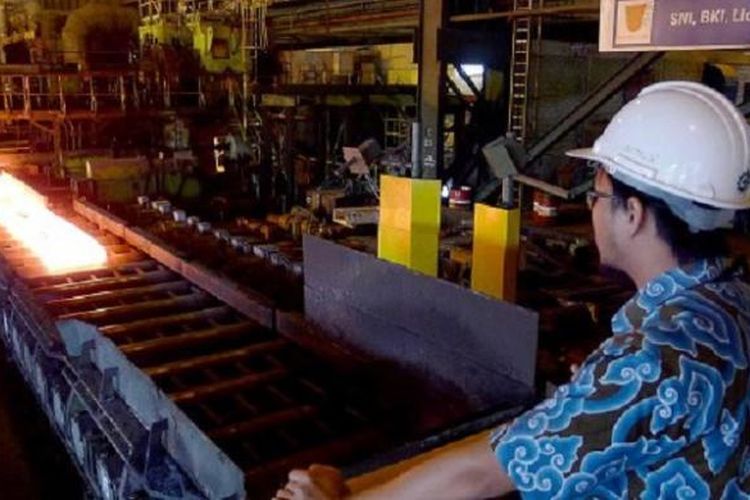
JAKARTA, KOMPAS.com – Uni Eropa resmi menghentikan penyelidikan antisubsidi terhadap hot rolled stainless steel (HRSS) atau baja gulung panas stainless steel Indonesia. Maka, produk HRSS RI kini lolos dari ancaman tindakan antisubsidi Uni Eropa. Keputusan itu ditetapkan pada 6 November 2020 dan diumumkan secara resmi dalam situs web Uni Eropa pada 9 November 2020. Menteri Perdagangan Agus Suparmanto mengatakan, keputusan tersebut dibuat setelah Asosiasi Industri Baja Uni Eropa (EUROFER) mencabut permohonannya pada 18 September 2020 lalu. Baca juga: Uni Eropa Gugat Amazon Terkait Dugaan Monopoli “Indonesia menyambut baik keputusan Uni Eropa untuk membatalkan penyelidikan karena dari awal kami meyakini bahwa produk Indonesia selalu bersaing secara adil di pasar Eropa,” ujar dia dalam keterangan resmi, Rabu (18/11/2020). Menurutnya, pembatalan penyelidikan ini membuka peluang untuk terus mendorong ekspor HRSS ke Uni Eropa. Ia memastikan, Kemendag akan terus mendukung industri Indonesia untuk bisa memanfaatkan pembatalan tersebut. “Pemanfaatannya dengan cara meningkatkan kinerja ekspor produk HRSS ke Uni Eropa, serta secara proaktif menjaga akses ekspornya,” kata Agus. HRSS merupakan produk baja yang dihasilkan dari penggilingan baja nirkarat dalam keadaan panas. Ekspor produk HRSS Indonesia ke Uni Eropa dimulai pada 2018 senilai 99,3 juta dollar AS dan meningkat di 2019 menjadi 100,5 juta dollar AS. Baca juga: Ekspor RI Naik Jadi 14,01 Miliar Dollar AS, Terbesar dari Besi dan Baja Namun pada Oktober 2019, Uni Eropa secara resmi memulai penyelidikan antisubsidi terhadap produk HRSS asal Indonesia berdasarkan permohonan EUROFER. Uni Eropa menuduh pemerintah Indonesia memberikan insentif atau bantuan finansial bagi produsen melalui serangkaian kebijakan larangan atau pembatasan ekspor bahan baku mineral, yaitu bijih nikel, batu bara, dan scrap logam, sehingga menekan harga bahan baku tersebut di Indonesia. Selain itu, Uni Eropa menduga adanya dukungan pemerintah Indonesia dan pemerintah China terhadap pembangunan kawasan industri di Morowali, serta industri mineral dan logam di lokasi tersebut melalui kerja sama ekonomi bilateral Indonesia-China.

Artikel ini telah tayang di Kompas.com dengan judul “Uni Eropa Hentikan Penyelidikan Antisubsidi Produk Baja Gulung Panas asal RI “, Klik untuk baca: https://money.kompas.com/read/2020/11/18/100127526/uni-eropa-hentikan-penyelidikan-antisubsidi-produk-baja-gulung-panas-asal-ri.
Penulis : Yohana Artha Uly
Editor : Bambang P. Jatmiko

Uni Eropa Diskriminasi Sawit Indonesia, Menlu Retno: “Treat Us Fairly”

JAKARTA, KOMPAS.com – Menteri Luar Negeri Retno Marsudi menyoroti persoalan diskriminasi produk kelapa sawit Indonesia oleh Uni Eropa. Ia memastikan, persoalan ini akan dihadapi secara tegas oleh Indonesia. Kelapa sawit merupakan komoditas unggulan yang menjadi tulang punggung perekonomian Indonesia. Nilai ekspornya pun mencapai 23 miliar dollar AS pada tahun lalu. “Kita tahu ada diskriminasi terhadap sawit Indonesia, bahkan kampanye negatif, khususnya di Eropa. Kita ingin selalu melawan diskriminasi ini,” ujarnya dalam sambutan pada acara Jakarta Food Security Summit-5 secara virtual, Kamis (19/11/2020). Baca juga: Bicara Soal Green Diesel Pertamina, Jokowi : 1 Juta Ton Sawit Petani Bisa Diserap Menurut Retno, tindakan diskriminatif yang dilakukan Uni Eropa bertentangan dengan prinsip kemitraan dan kolaborasi dalam hubungan antar negara. Ia mengaku, beberapa hari lalu telah melakukan komunikasi dengan High Representative-Vice President Komisi Eropa Josep Borrell untuk membahas pentingnya meningkatkan kemitraan satu sama lain dan menyelesaikan persoalan diskriminasi kelapa sawit Indonesia. “Saya sampaikan mengenai pentingnya kemitraan yang lebih kuat dan menyelesaikan isu diskriminasi terhadap sawit Indonesia. Indonesia selalu melakukan komunikasi secara terbuka, yang kita inginkan adalah satu, treat us fairly (perlakukan kami dengan adil),” ungkap Retno. Dia menegaskan, Indonesia akan selalu melakukan komunikasi dengan Uni Eropa untuk penyelesaian isu kelapa sawit tersebut. Retno bilang, tentunya Indonesia ingin memiliki kemitraan yang lebih kokoh dengan Uni Eropa yang memang sudah lama menjadi natural partner, lantaran kedua pihak memiliki kesamaan pandangan di banyak isu. Selain kelapa sawit, Retno juga memastikan, akan terus mengawal berbagai komoditas unggulan Indonesia yang mengalami ketidakadilan di pasar global. “Tentunya tidak berhenti kelapa sawit saja, kita sepenuhnya mendukung dan terus mengawal berbagai komoditas unggulan di RI seperti kopi, teh, karet. Karena diplomasi Indonesia tidak ingin tinggal diam dan akan terus berdiri untuk tegak membela kepentingan nasional kita,” pungkasnya.

Artikel ini telah tayang di Kompas.com dengan judul “Uni Eropa Diskriminasi Sawit Indonesia, Menlu Retno: “Treat Us Fairly””, Klik untuk baca: https://money.kompas.com/read/2020/11/19/113825026/uni-eropa-diskriminasi-sawit-indonesia-menlu-retno-treat-us-fairly.
Penulis : Yohana Artha Uly
Editor : Erlangga Djumena

APEC 2020 & INDONESIA IN THE MIDST OF GLOBAL PANDEMIC
https://www.apec.org/

Hendra Manurung, is currently a doctoral candidate of International Relations, Padjadjaran University, Bandung; Teuku Rezasyah is an Associate Professor of International Relations at the same university

Malaysia was assigned to host the APEC meeting in 2020, and hope the commitment of APEC leaders’ countries to the multilateral trading system. This commitment is important in order to maintain global market and financial stability so that global trade and foreign investment guarantees continue to flow in times of crisis and global economic recession.

The APEC 2020 event theme is ‘ Reimagined: Priorities in the Aftermath of COVID-19’. Indonesia, through its ministry of trade, highlights APEC contribution in the midst of a global pandemic outbreak being relevant to overcome global uncertainty in the current economy and trade outlook.

In fact, for two years in 2018 and 2019, the APEC leaders’ forum failed to reach a final agreement at the APEC leader level to overcome various global challenges.

As the host, Malaysia faces considerable challenges, namely the achievement of the Bogor Goals target which is still not as expected, it is not easy to formulate a new post-2020 APEC vision that can accommodate the interests of the entire APEC economy, and high hopes for a joint declaration at the APEC leadership level.

However, apart from the need to ensure the growth of the digital economy, it also needs a sustainable inclusive economy and the optimal use of digital platforms in financial transactions. Furthermore, it is necessary to ensure and simplify cooperation between the government and the private sector in the Asia Pacific countries region.

Indonesia, China, together with a number of leaders of APEC member countries in the APEC annual meeting in Kuala Lumpur, Malaysia were held virtually to encourage a more open, transparent trade, and strengthen multilateral cooperation. It is hoped that these norms, principles, and steps will greatly support the performance of the global economy which is being severely affected by the COVID-19 pandemic.

President Joko Widodo has prioritized the importance of developing a favorable climate for foreign investment in Indonesia and the Asia Pacific region. It is possible that the Omnibus Law will improve the business climate and support national economic growth, along with regulatory and bureaucratic reforms. This is important considering the flexibility of regulations and the dexterity of the Indonesian bureaucracy in dealing with the current difficult times so that it is ready to open the widest possible door for businessmen and investors through the application of new methods.

The Omnibus Law which massively simplifies various regulations is said to aim to create a quality business and investment climate for business actors, including micro, small and medium enterprises. Although, this decision has sparked resistance, protests, and controversy in the country, however, it is expected that this regulation will be able to reduce overlapping regulations and complicated and complex procedures. The cumbersome licensing bureaucracy was also reduced. Illegal fees that have hindered business and investment entry are eradicated.

This rule also makes it easier for MSME business actors, where they do not need to apply for a permit but simply register the type of business. The entire licensing process is integrated into an electronic system through an online single submission.

Business activities and investing are made easier and less difficult. The formation of a limited liability company is made simpler and there is no longer a minimum capital limitation. Patents and brands are also being processed accelerated. Land acquisition and optimization of land utilization for public interest and investment will be much easier.

The APEC economy is expected to become a pillar of world economic stability by focusing on equitable economic cooperation so that all levels of society can participate and enjoy economic prosperity equally. APEC’s contribution can be achieved by boosting human resources potentials. It is very important to support sustainable economic growth in member countries including Indonesia which is also in line with the vision of the central government.

Suppose Indonesia will play a proactive role as Southeast Asia leading economy in supporting the implementation of the APEC blueprint related to strengthening the global value chain for the 2020 to 2025 periods.

Indonesia’s active role is in accordance with President Joko Widodo’s direction in RPJMN 2020 to 2024 in supporting Indonesia’s economic transformation, from dependence on natural resources shifting to an economy based on manufacturing competitiveness and the provision of high-value-added modern services.

It is certain that Indonesia will cooperate closer with other pioneer countries in the world economy, such as China and the US, in designing a capacity-building program for the APEC economy to gain more benefits from the global supply chain.

It is most likely that Donald Trump will represent the US at APEC 2020 Summit. Trump’s presence will be his second participation after 2017. Trump has been criticized for being less involved in the East Asia Summit in early November as part of the 2020 ASEAN Summit activities held virtually in Hanoi, Vietnam.

Chinese President Xi Jinping promised to open up his domestic market more widely, actively cooperating with all countries, regions, and companies.

Xi Jinping stressed that China’s gross domestic product has reached 10,000 US dollars per year. The number of Chinese middle-class citizens currently reaches more than 400 million people. Various international agencies are projecting that the Chinese retail market in 2020 will penetrate the US $ 6 trillion.

Thus, it is certain that there will be greater demand for quality products, the use of information technology, and the standardization of service quality from around the world.

It is expected that through the signing of a regional economic comprehensive partnership (RCEP) will have an important meaning in global trade and sustainable multilateral cooperation for economic integration in the Asia and Pacific region.

Moreover, with the election of Joe Biden as the 46th US president in early November 2020, it is hoped that the US government will be more constructive and emphasize goodwill in dealing with other countries in the region without conflicting with other economic powers.

RCEP for developing countries can reduce trade barriers to agricultural products, manufactured goods, and components that make up the majority of their exported commodities.

However, the RCEP partnership is considered to have little to do with trade in services and the availability of access for various companies to operate in their respective economies, something the US and other developed countries want.

Also, it is necessary to gradually reduce tariffs and institutional costs, develop a number of import trade promotion innovation demonstration zones, and expand product imports and strengthen high-quality services in all member countries.

Most APEC countries face unprecedented times, demanding bold responses along with the world’s greatest health and economic crisis of a hundred years. For sure, these challenges demand sustaining cooperation, coordination, and collaboration actively without any left behind through market integration, creative innovation, and regional inclusion.

The crisis response remains a pressing concern in many economies, and requires an ongoing focus on ensuring access to essential medical supplies and services, including vaccine availability; keeping supply chains functioning, and avoiding fragmented policy approaches, including in the digital economy and the safe resumption of travel. These would serve to revive all business activities and market demand that would accelerate global economic recovery.

Free and open trade and investment have indeed resulted in greater prosperity within the Asia Pacific along with underscoring the fact that benefits accruing from trade and investment have not permeated across all segments of all society.

Even today, there is much room for us to improve the narrative of trade and investment with a view to bring tangible benefits to all people fairly.

To conclude, APEC’s success key is openness, cooperation, and transparency amongst member-countries to look for Asia Pacific economic recovery sooner or later.

JAPAN-AUSTRALIA DEFENSE PACT IN INDO-PACIFIC
www.idntimes.com

Hendra Manurung, is currently doctoral candidate of International Relations, Padjadjaran University, Bandung; Teuku Rezasyah is Associate Professor of International Relations at Padjadjaran University, Bandung.

It is not difficult to understand why Japan and Australia plan developing defense cooperation for some years previously. Most likely the factor of militarization and deployment of the Chinese navy since late December 2019 in the South China Sea is one of the main triggers.

The defense pact is confirmed to be Japan’s first agreement after 60 years to allow a foreign military presence on its territory, since the status of a defense agreement in 1960 with the United States, which allowed America to place warships, fighter jets, and, thousands of military troops on board, around the territory of Japan.

The challenges and risks posed to the global and regional geostrategic landscape, particularly by or under the impact of the COVID-19 pandemic, as well as the dynamics in major power relations.

At present, all countries in these regions also face non-traditional challenges such as terrorism, smuggling, natural disasters, and cybercrime, which no single country can tackle and overcome on its own, have been widely considered as common concerns by policy-makers regional leaders.

Meanwhile, ASEAN as a regional organization should to be serious on responding to current regional conditions and immediately reducing escalate tensions that may arise and lead to open conflicts. After the US presidential election on November 6, 2020, Joe Biden and Kamala Harris won the election and will be sworn in on January 21, 2021, as the 46th US President replacing previous president, Donald Trump (45th US President, 2016-2020).

The good news of new US leadership is predicted will reduce the US and China trade war globally along with both major powers rivalries in the South China Sea and India and China border disputed conflict killed twenty and injured others, Indian soldiers, recently.

From 1967 to 2020, ASEAN as a regional organization is able to maintain regional cooperation and supposed to be remaining as the primary driving force in steering regional peace and stability to develop further as a central pillar in the evolving regional security architecture years ahead.

The defense pact between Japan and Australia was agreed upon and signed by Yoshihide Suga and Scott Morrison in Tokyo on November 17, 2020 (Kompas, 19/2/2020). The two countries have been negotiating a six-year defense agreement (2014-2020), although this agreement still needs to be ratified by both parliamentarians in Canberra and Tokyo.

This latest agreement is to facilitate more joint military operations and exercises in their respective regions. If needed in a situation of urgency, it is possible for the Japanese military to protect Australian troops and vice versa.

The pact, called the Reciprocal Access Agreement, provides a legal framework that allows troops to visit each other’s countries and conduct joint training and operations. These developments have further strengthened the defense relationship between the two US allies.

The move will also be Japan’s first agreement to include a foreign military presence on its territory since signing a troop status agreement in 1960 with the United States. Tokyo works closely with Washington D.C, enabling the US to deploy warships, fighter jets, and thousands of troops in and around Japan as part of a military alliance on a regional security home-base.

It is implemented by deploying around fifty thousand US soldiers and its 7th fleet armada. Perhaps, Australia also might be able to send two thousand to five thousand military troops, warships, and frigates to securing Japanese territories.

Japan and Australia previously established defense cooperation in 2007, a first for Japan with a country other than the US. Then in 2013, the two countries agreed to share military supplies mutually, and in 2017 the cooperation boosted to include the procurement of military ammunition after Japan then relaxed import restrictions related to the transfer of weapons equipment.

http://amscip.org

Essentially, the two countries, Australia and Japan indeed do not explicitly mention China’s presence in the region as a major and real threat in the Defense Pact. However, this defense agreement was carried out to strengthen both countries’ defense cooperation in response to the expansion of China’s military presence in the East China Sea, South China Sea, Hong Kong, and beyond. Obviously, these two countries are targeting China.

In the South China Sea, Beijing has been accused of militarization in disputed territorial waters, while in the East China Sea, Japan and China have disputed over ownership of the island of Senkaku. On the other hand, Canberra is also arguing with Beijing over restrictions on the export of a number of Australian exporting products to China.

As with other defense pacts, this agreement is a right and part of state sovereignty to maintain regional peace and security and the survival of their national interests in the region.

However, if in the end, this defense pact will lead to the deployment of military force, then of course this can create tension in the situation and can trigger an escalation of open conflict in the Asia Pacific region.

Previously, the Japanese government had stepped up defense under former Prime Minister Shinzo Abe, by purchasing stealth fighters and other modern military weapons, as well as encouraging Japanese military cooperation and adjusting the compatibility of military weapons with America.

In addition to discussing the defense pact between Japan and Australia, they also discussed cooperation in overcoming the coronavirus and hydrogen technology. Japan aims to become the third-largest carbon-free economy by 2050.

During the meeting, Morrison also discussed energy and climate change with Japanese businessmen and indicated that carbon capture and storage and low-emission technologies would be part of the domestic solution. Australia has agreed to achieve zero carbon emissions within the stipulated time.

Morrison has rejected calls for a 2050 target, vowing to do so when it can explain the economic costs to the Australian people. Australia is heavily dependent on coal and gas exports. Korea, the US, and the UK have designated 2050 as zero carbon emissions as the UK has urged Australia to reduce carbon emissions.

During his visit, Morrison also met with the president of the International Olympic Committee, Thomas Bach, who is trying to push Queensland to host the Summer Olympics and Paralympics in 2032.

Japan and Australia are currently having a less than harmonious relationship with China. With Japan relations deteriorated due to Japan’s wartime territory of China and sovereignty dispute in Senkaku, a chain of islands in the East China Sea regions known as Diaoyu in China. The Japanese administered the island; however, Chinese military surveillance ships were frequently near the island. Meanwhile, Australia clashed with China over Prime Minister Morrison’s appeal in April 2020, explicitly asking for a thorough comprehensive transparent investigation into the global outbreak of the coronavirus and upsetting China to continue with restrictions on imported products from Australia.

Japan has embarked on a vision of the “Free and Open Indo-Pacific” of economic and security cooperation as opposed to Chinese influence, and recently Japan hosted foreign ministerial discussions among countries known as the “Quad” which consists of from America, Australia, and India.

These four countries are trying to invite countries from Southeast Asia and its surroundings to reduce the expansion of Chinese influence in the Indo-Pacific region.

This bamboo curtain country defends its decisions and behavior in regional seas as peaceful actions and denies violating international rules and deliberately ignores the 1982 UNCLOS. China also considers the formation of the Quad as the embryo of NATO birth in the Asia Pacific which aims to fight it frontally.

Warships and aircraft from the four “Quad” countries kick off the annual joint military exercise Malabar in the Bay of Bengal, India on November 3, 2020.

The joint military exercise is being carried out less than a month since mid-October 2020 following a highly symbolic Quad meeting in Tokyo with foreign ministers from the four most powerful democratic countries in the Indo-Pacific region.

Australia is rejoining the exercise for the first time in 13 years, since its participation in 2007.

The Malabar exercises are not officially linked to the Quad forum, but they are clearly a counterweight to Beijing’s expanding military and political influence in the region.

The Quad’s joint military exercises in Malabar have the veiled intention of thwarting Chinese influence.

The military activity is divided into two phases, namely the first phase starting from 3 to 6 November 2020, followed by the second phase at the end of November.

These military exercises also include anti-submarine and anti-aircraft practical exercises designed to improve interoperability between the military forces of the four nations.

This joint Malabar military exercise certainly provides an opportunity for the navies of the four like-minded nations, sharing a common vision of a more stable, open, and prosperous Indo-Pacific, to operate and train together in achieving regional stability.

To conclude, it is still relevant to highlight ASEAN’s role in the meeting involving these countries to keep reminding those intentional ambitions, that, as stated in the ASEAN Chairperson’s Statement at the last Summit 2020, “not to use threats or force” in resolving problems in the region. When talking about ASEAN and optimizing its influence, Indonesia clearly is still recognized as prioritizing a major role among global major powers.

ASEAN+5 RCEP BENEFITS FOR INDONESIA
President Joko Widodo and Minister of Trade Agus Suparmanto at the signing of the Regional Comprehensive Economic Partnership agreement of the ASEAN Summit from the Bogor Palace, SETNEG/Biro Pers Setpres

Writer: Hendra Manurung (Hendra Manurung is currently pursuing a doctoral degree in international relations at Padjadjaran University, Bandung)

On 15 November 2020, the Regional Comprehensive of Economic Cooperation known as RCEP signed by Indonesia President Joko Widodo. It will cover ASEAN member-countries with its five partner countries, such as Australia, China, Japan, South Korea, and New Zealand. But it is rejected by India. It is expected that ASEAN RCEP will benefit Indonesia’s various export products.

In fact, these various benefits ranging from the increased gross domestic product (GDP), boosting exports, and attracting foreign investments coming to Indonesia and more.

The negotiations, which initially started with 16 countries, ended up being signed by 15 countries, involving 10 ASEAN countries and 5 partner countries, namely China, South Korea, Japan, Australia, and New Zealand. As is known, India withdrew from negotiations in 2019.

RCEP is still open to India, if India is interested in re-joining, as RCEP will remain open to India when it is ready to rejoin as the original negotiating party.

This also strengthens the declaration put forward by the RCEP trade ministers when holding the RCEP Summit Preparation previously on 11 November 2020.

RCEP is still considered as a mega-regional free trade agreement covering Southeast Asia, East Asia, and Oceania.

All countries of RCEP understand the domestic economic challenges India is facing when it withdraws from the RCEP negotiation process last year.

Further, based on Indonesian Fiscal Policy Agency study in 2019, stated that Indonesia could increase GDP by 0.05% during the 2021-2032 period if it participated in RCEP.

However, if Indonesia does not participate in RCEP, then the national GDP might experience a decline of 0.07% during the same period, from 2021 to 2032.

RCEP will also provide welfare gain for Indonesia around US$ 1.52 billion.

Table 1 Indonesia Balance of Trade, Oct. 2019-Oct 2020 (in millions US$)

Period Result Progress
October 2019 US$ 122,4 surplus
November 2019 US$ – 1.396 deficit
December 2019 US$ -78 deficit
January 2020 US$ -636,7 deficit
February 2020 US$ 2.512,8 surplus
March 2020 US$ 715,7 surplus
April 2020 US$ -372,1 deficit
May 2020 US$ 2.015,7 surplus
June 2020 US$ 1.249 surplus
July 2020 US$ 3.238,4 surplus
August 2020 US$ 2.353,4 surplus
September 2020 US$ 2.390,4 surplus
October 2020 (temporarily) US$ 3.606,8 surplus

Source: Badan Pusat Statistik

Table 2 Indonesia’s export and import of non-oil and gas (in millions US$)

Countries Export Import
China US$ 2.860,3 US$ 2.798,1
The United States US$ 1.638,1 US$ 609
Japan US$ 1.064,3 US$ 731,3
India US$ 874,4
EU-27 16 billion Euro 10.2 billion Euro
Singapore US$ 706,5

Source: Badan Pusat Statistik

When compared to free trade agreements initiated by other countries, such as the Trans-Pacific Partnership (TPP), North America Free Trade Agreement (NAFTA), to the EU-27, the incorporation of 15 countries in RCEP is quite significant.

However, RCEP remains a global dynamic in world trade. RCEP without India represents cumulatively 29% of world GDP, 27.1% of world trade, 29.3% of world FDI and 29.6% of the world’s population.

The existence of RCEP should be able to be the best opportunity and opportunity for Indonesian export products to boost exports, attract investment, and increasing the competitiveness of national economic products in the region.

Suppose, this welfare gain can be defined as the surplus that consumers and producers get from a transaction. If from the consumer perspective, welfare gin is obtained when the price that consumers can pay is greater than the factual price in the market, while from the perspective of producers, welfare is obtained if the price they are able to offer to the market is lower than the factual price in the market.

Indonesia has the potential to avoid the trade balance deficit by US$ 491.46 million. Even so, this potential deficit might be balanced by maximizing the surplus and global supply chain needs through the backward linkage and forward linkage aspects.

Moreover, in order to attract foreign investment to Indonesia, Indonesia needs to do lots of homework regarding to national reforming policies and reforming the domestic bureaucracy.

The business and investment climate in Indonesia has the same attractiveness and can even be higher than in other countries.

Apart from the foreign investment side, to get benefits from the trade gain, Indonesia should be aware and more careful in utilizing RCEP as a benchmark for efforts to develop and to improve the national domestic supply chain and increase national productivity.

It is necessary to explore which potential sectors which still need to be facilitated in terms of increasing productivity and trade competitiveness in penetrating international markets in these areas.

There must be serious efforts by the Indonesian government together with all stakeholders so that the domestic business climate in this sector can be improved more efficient and more attractive so that investment from RCEP can be directed to that sector. In fact, Indonesia must also identify carefully which export products are more competitive for trading in the region.

Indonesia should be able to prepare the advantages of export products with high-quality standards and affordable competitive prices that can compete with other countries mostly in accessing the international market continuously.

Those countries that are most ready to implement RCEP, such as China, for example, are countries that already have and implement more trade agreements previously than Indonesia. This is because these countries may have carried out internal reforms first.

Indonesia should anticipate intense competition between countries over the implementation of a regional partnership agreement so that Indonesia is not merely a potential market for various products export partner countries.

In Southeast Asia, Thailand, Vietnam, and Malaysia perhaps are still better prepared than Indonesia. This is because the country has more complex trade agreements and has been implemented effectively to date.

Indonesia is still lagging behind because of the ease of doing business reform. Even though there is now a Job Creation Law, it must be ensured that its implementation is beneficial for all domestic stakeholders before RCEP can be effective after it has been ratified by all countries.

Apart from the need to work hard to realize increased exports, attract investment, and increase economic competitiveness in the region, RCEP is also expected to be able to create higher certainty of business activities in the region to normalize trade and investment flows, especially in the midst of the COVID-19 pandemic.

In the next 50 years, Indonesia needs to prepare a bumper to protect the sustainability of the domestic industry from the negative impact of free trade which is likely to be unfair.

The translation of the RCEP agreement text is targeted for completion within two months before ratification. Previously, it was necessary to carry out a comprehensive impact analysis by the government and the DPR.

A comprehensive agreement such as the RCEP should have consequences for the content of rules that must be adopted in the regulatory framework of the national economy. Obviously, this will have an impact on the narrowing of the government policy space and state sovereignty to protect the interests of the Indonesian people.

All domestic stakeholders must be involved in the decision-making process for the ratification of the RCEP agreement, including small and medium scale entrepreneurs.

Without any clear preparation and blueprint, the resilience of the domestic industry will in fact be battered, while competing with various cheaper imported products.

The bumper is in the form of a non-tariff policy where this effort is common in other countries in the midst of free competition. However, Indonesia needs to be careful and limited in implementing it so as not to lead to trade disputes with other countries.

Another bumper is related to the precautionary principle and the need for stages in ratifying the RCEP. Not all points of the agreement need to be ratified if they are deemed to be detrimental to the domestic industry. Thus, the ratification process must involve many related parties and be discussed openly.

Trade expansion between countries can only be done if a country has its export products that are ready to be marketed. Currently, around 72% of exports in the global market are manufactured products, while Indonesian exports still rely on commodities such as palm oil and coal.

If Indonesia has not been able to shift to the manufacturing sector, it is certain that Indonesia will only be flooded with imported products or simply become a producer of raw material sources and not shift from traditional markets.

The challenges are even more difficult amid the global pandemic which has hit various domestic industrial sectors, especially manufacturing.

To conclude, the advantage obtained through joining RCEP is how Indonesian export products are able to drive themselves to be more productive and competitive. The government and all business actors need to be more aggressive and quick to make structural adjustments in optimally utilizing RCEP opportunities.

Indonesia – EAEU relations: developing trade and economic cooperation

Hendra Manurung,  doctoral student, international relations, Padjadjaran University; Arry Bainus, professor, international relations, Padjadjaran University. Published as a submission to the MIWI Institute. Bandung, 14 September 2020.

Indonesia strengthens economic cooperation with countries in Eastern Europe and Central Asia which are members of the Eurasian Economic Union (EAEU), through the process of establishing a Free Trade Agreement (FTA) between Indonesia and EAEU. The path to this process was highlighted at the inaugural meeting between the Indonesian delegation and the Eurasian Economic Commission (EEC), the executive body of the EAEU (Indonesia Ministry of Foreign Affairs, July 10, 2020). The meeting was a follow-up to Indonesia’s proposal to form a Joint Feasibility Group (JFG) in the framework of the formation of the RI-EAEU FTA which was approved by the EAEU Trade Ministers on May 18, 2020.

East Europe and Central Asia, often also called Eurasia is a prospective market for leading Indonesian products. It can be done through the process of deepening trade and economic cooperation with Indonesian traditional markets, as well as seeking to open new markets for Indonesian products in prospective countries. The Eurasian Economic Union is an international organization for regional economic integration. It has an international legal personality and is established by the Treaty on the Eurasian Economic Union. It provides for free movement of goods, services, capital, and labor, pursues coordinated, harmonized, and single policy in the sectors determined by the Treaty and international agreements within the Union.

Further, the two parties discussed a number of issues in the Terms of Reference (TOR) of the Joint Feasibility Study Group (JFSG), including Objectives, Scope, JFSG Methodology, Timeline, and Publication of Terms of Reference and Joint Reports. The meeting agreed to review various inputs, exchange drafts, including a meeting plan to finalize the terms of reference.

The inaugural meeting was a step forward since the RI-EAEU FTA plan was initiated in 2017. The formation of the RI-EAEU FTA will encourage the expansion of Indonesia’s export market and increase Indonesia’s trade cooperation with EAEU. EAEU consists of Russia, Kazakhstan, Belarus, Kyrgyzstan and Armenia, which are rich in natural resources, agricultural products, and have technological advantages with large market potential, namely a population of more than 180 million, and GDP according to PPP of US$ 4.4 trillion or GDP per capita US$ 24,800.

In the international market, it is believed, Indonesia has a huge asset to develop a quality and sustainable economy. The markets and productive population of Indonesia reached about 150 million people will optimize the bargaining power of its own and will continue to be capitalized in developing economic cooperation with other countries for mutual benefit.

Indonesia’s economic diplomacy will continue to be encouraged and oversee Indonesia’s outbound investment policies abroad for the expansion and diversification of the Indonesian product market, as well as increasing the competitiveness of Indonesia’s industry at the international level and in the Asia Pacific region. At least, there are 285 Outbound Investment Indonesia today with a value of US$ 14.30 billion

In 2020, a number of economic cooperation negotiations will be a priority, such as the ratification of the IA-CEPA; ratification of the I-EFTA CEPA; RCEP signing; intensification of PTA / FTA / CEPA negotiations with African, South and Central Asian countries as well Pacific; exploring the FTA with the Eurasian Economic Union (EAEU), and encourage the implementation of economic agreements that have been signed with partner countries.

Economic diplomacy will also be continuously focused on enabling quality foreign investment to support Indonesia’s sustainable national development priorities, infrastructure development, human resource development, strengthening downstream industries, and the development of the outer, frontier islands, including the Natuna Islands.

Asian political stability and its dynamics of economic growth is a prospect for Russia to be engaged further. It is related to how Russia re-establishes political and economic influence progressively in the region in maintaining her eastward-focused integration drive, including building a southeastwards bridge to China and the Asia Pacific. In this context, therefore, the cooperative nature of Russian policies is the condition sine qua non for the establishment of the Eurasian Economic Union in 2015. Russia is perceived to consistently contribute its role as a unifier of the Commonwealth of Independent States (CIS).

Roman A. Romanov, representative of the Ministry of Foreign Affairs of the Russian Federation stated that, the progress of cooperation between the two countries especially in the economic, security, military, humanitarian, and cultural. During 2019, Indonesia and Russia have reached trade amounted to US$ 2.45 M, and is expected to increase after the signing of a strategic partnership (Indonesia Ministry of Foreign Affairs, Aug. 25, 2020).

Meanwhile, on the 14th ASEM Foreign Ministerial meeting in Madrid, Spain, Indonesian Foreign Minister, Retno Marsudi and Kazakhstan’s Foreign Minister, Mukhtar Tileuberdi met and discussing the efforts of the two countries in exploring opportunities for economic cooperation (Indonesia Ministry of Foreign Affairs, Dec. 17, 2019). Indonesia and Kazakhstan recorded a significant increase in trade value from US$ 60.3 million in 2018 to US$ 317.85 million in the January-October 2019 period. However, there is still a lot of potential for cooperation between the two countries that need to be explored, including in the banking, halal industry, agriculture, energy, and strategic industry.

Further, Jakarta also hoped that Astana would render its support as a member of the initiator of the Eurasian Economic Union (EAEU) towards the initiative of forming the Free Trade Agreement Indonesia – EAEU. Suppose that the cooperation within the EAEU framework is expected to further advance the regional economy, especially in Europe and Asia continent. Also, Indonesia expressed its wish for both countries to further explore the potentials of cooperation at the 2nd Joint Commission on Economic Cooperation. The Joint Commission is expected to open new frontiers of economic cooperation, especially in increasing business-to-business contact.

Kazakhstan also requested Indonesia to elevate its participation in the Islamic Organization for Food Security to a full membership. They also invited Indonesia to attend the Conference on Interaction and Confidence Building Measures (CBM) in Asia in 2020, in which Kazakhstan would hold chairmanship in 2020-2022.

Indonesia together with the Eurasian Economic Commission (EEC) signed a Memorandum of Cooperation in the framework of enhanced cooperation between Indonesia EAEU (Eurasian Economic Union). The signing was done by the Minister for Trade, Enggartiasto Lukita, and the Minister for Integration and Macroeconomics of the EEC, Sergey Glaziev, on the sidelines of the Trade Expo Indonesia in ICE BSD City, Tangerang (Indonesia Foreign Ministry, Oct. 18, 2019). The meeting is the implementation of President Joko Widodo in accelerating export done through the opening of new markets for Indonesian products, and EAEU countries are non-traditional (Indonesia Ministry of Trade, Oct. 18, 2019).

In Jakarta, on February 14, 2019, Indonesia pioneered the beginning of trade talks and economic cooperation with five Eurasian countries who are members of the Eurasian Economic Union (EAEU).

Indonesia was chosen to host the 2020 Parliamentary Meeting of the Eurasian Countries or the 5th Meeting of Speakers of the Eurasia Countries’ Parliaments / MSEAP. Indonesia in Southeast Asia has a very strategic position. That is why the Eurasian countries specifically asked Indonesia to host it in 2020.

Furthermore, the countries of the Eurasian region are countries that have prospectus relations with Indonesia from the side of trade as well as the other side of politics and culture.

In the midst of the global pandemic, for Indonesia, Eurasia can be an entry point in conducting and developing trade diplomacy. For example, about palm oil, there is currently a negative campaign on palm oil initiated by several European countries that are members of the European Union.

Indonesia and the EAEU have agreed to sign a memorandum of cooperation (MoC) to enhance economic cooperation through bilateral trade and foreign investment. The cooperation is mostly focused on trade and investment. Memorandum of Cooperation is a form of agreement to establish a Joint Working Group to discuss ways and means to increase trade and investment between the two parties. Indonesian Minister of Trade, Enggartiasto Lukita, signed the MoC with the Minister for Integration and Macroeconomics of the Eurasian Economic Commission (EEC) Tatyana D. Valovaya.

At this meeting, the two ministers agreed to increase bilateral cooperation regarding the establishment of a joint working group. Therefore, these ministers instructed the technical officials to immediately finalize the MoC. This meeting is also a follow-up to the previous meeting which took place in December 2017. Previously, EEC had also signed a similar MoC with several ASEAN countries such as Singapore, Thailand, Vietnam, and Cambodia. EEC is a unitary government body for economic integration in the Eurasia region (EAEU) which was formed in 2014. EAEU has members from countries in the Eastern European and Central Asian regions such as the Russian Federation, the Republic of Armenia, the Republic of Belarus, the Republic of Kazakhstan, and the Republic of Kyrgystan.

The trade value between Indonesia and EAEU in 2017 reached US$ 2.79 billion. In the same year, also, Indonesia’s exports to the EAEU amounted to US$ 1.25 billion. Indonesia’s main export products are palm oil (US$ 386.75 million), machine tools (US$ 178.16 million), coffee (US$ 78.97 million), palm seeds (US$ 77.22 million), and margarine (US$ 50.92 million).

Meanwhile, Indonesia’s import value from EAEU in 2017 was US$ 1.54 billion with the main products including semi-finished steel (US$ 419.18 million), mineral and chemical fertilizers (US$ 322.45 million), wheat and merlin (US$ 246.16 million), and aluminum (US$ 82.89 million).

It is hoped that the formation of a joint working group will encourage trade and investment relations between Indonesia and the EEC, the elimination of trade barriers, and collaboration in various sectors which are mutual interests of both parties.

Indonesia also realized in achieving high economic growth and the quality is now facing the challenge of protectionism, narrow nationalism, and a variety of false populism campaigns.

Indonesia considers that this negative trend must be transformed into positive energy. The rivalry is important to turn into cooperation and the trust deficit must be replaced by a strategic trust.

In the midst of increasing protectionist attitudes, Indonesia will build a coalition to continue to promote the paradigm of mutual benefit, justice, and not zero-sum. The keyword is collaboration. The collaboration will create opportunities, create new centers of economic growth, and can find solutions to global challenges.

It is also important for Indonesia and the countries that are members of Eurasia to uphold applicable international law as high as possible, especially in realizing world peace and global stability, especially in the Asia Pacific region.

Source: https://miwi-institut.de/archives/572

EMPOWERING INDONESIA’S DEFENSE DIPLOMACY IN ASIA PACIFIC
Presiden Rusia Vladimir Putin dan Presiden Indonesia Susilo Bambang Yudhoyono (https://en.kremlin.ru/)

Writer: Hendra Manurung (Hendra Manurung is currently pursuing a doctoral degree in international relations at Padjadjaran University, Bandung)

Indonesian Defense Minister Prabowo Subianto visited eight countries since being officially inaugurated by President Joko Widodo on 20 October 2019. On 23 October 2019, he visited Malaysia, Thailand, the Philippines, Turkey, China, Japan, France, and finally Russia. Prabowo carried out a number of missions. It began with the release of Indonesian citizens who were held hostage by the Abu Sayyaf group in the Philippines to increasing strategic cooperation in the field of bilateral defense.

However, the intensity of Prabowo’s visit invited criticism from several groups such as DPR members and defense military observers but received support from President Joko Widodo. The President emphasized that Prabowo’s working visit was carried out in the context of carrying out and intensify Indonesia’s defense diplomacy abroad.

One of the objectives of the Minister of Defense is to strengthen and modernize the main tools of the Indonesian weaponry system, by exploring the possibility of procurement from defense equipment producing countries that cannot yet be fulfilled by the domestic defense industry as well as offering Indonesian weapons system products that are already capable of being produced by the domestic defense industry, such PT. Pindad Bandung and PT PAL Surabaya to other consumer countries.

Indonesia Defense Diplomacy

Efforts to seize and defend Indonesian independence involve all components of the nation in various ways. For example, the army and the people take up arms on the battlefield, and diplomats are fighting at the diplomatic negotiating table with diplomats from other countries, for example in the General Offensive on 1 March 1949.

This Indonesian heroic military action in reclaiming Dutch-controlled Jogjakarta was also intended to show the international community that Indonesia and the TNI still existed. The success of the Indonesian military attack then became ammunition for diplomats to thrill the negotiating table.

As a result, the Netherlands recognized Indonesia’s sovereignty in a Round Table Conference on 27 December 1949. This is because diplomacy was originally intended to eliminate conflict, ease tensions, avoid war, and end the war (Simamora, Opportunities, and Challenges of Defense Diplomacy: 2013).

Indonesia also had the experience of having a formidable defense weaponry system during the struggle against Dutch colonialism and after proclaiming independence on August 17, 1945. Among them, the ownership of various types of modern combat aircraft at that time, such as the TU-16-KS bomber, the Mig-15 fighter plane / 17/19/21, Ilyuhsin, and attack helicopters. Also, the Indonesian warship, the destroyer class KRI Irian, which became the largest ship in the Southeast Asia region, were all purchased from the Soviet Union (currently is the Russian Federation). The defense equipment was used by the Indonesian armed forces for propaganda to reclaim West Irian from the hands of the Dutch, 1962 to 1963.

The superiority of Indonesian defense equipment in the Asia Pacific region is used optimally as a major support for diplomacy negotiation against the arbitrariness of Western countries against the territory of the country that was once colonized.

However, apart from the shrewdness of President Soekarno who took advantage of his closeness to the Soviet Union as a bargaining power to garner support from the United States, diplomats used it well until West Irian was finally captured. Thus, defense diplomacy has been carried out by the country’s leaders since the beginning of independence and during the war after independence.

Defense diplomacy is actually a new vocabulary in the world of international relations. The term defense diplomacy first appeared in the UK Department of Defense’s Strategic Defense Review which was published in 1998. The main focus of SDR’s version of defense diplomacy aimed at the countries of the former Soviet Union and former members of the Warsaw Pact is to carry out reforms in the security sector and conflict prevention. For this reason, as explained by Cottey and Forster (in Sulayman: 2016).

Defense diplomacy can be defined as the use of armed forces and related infrastructure during peacetime as a main supporting tool to pursue the main objectives of foreign policy and national defense.

Obviously, Article 1 Paragraph 1 of Law Number 3 of 2002 concerning State Defense explicitly states that national defense is all efforts to defend the sovereignty of the Republic of Indonesia.

The post-Indonesian proclamation, as the largest archipelagic country in the world that has a commitment and concern for the implementation of international world order and lasting peace, Indonesia certainly avoids using any hard power in facing threats from other countries. Indonesia places diplomacy as the first line of defense. This is also parallel with Indonesia’s defense doctrine which is defensive, not offensive.

However, defense diplomacy to maintain and achieve national interest cannot be separated from how much national power one has. One of the nine national powers, referring to Morgenthau, is military capabilities. Mearsheimer said the military is the actual power for a country.

Therefore, military power needs to be increased in attack and defense capacity in line with the need to strengthen defense diplomacy in international relations. Indonesia was able to carry out high-profile diplomacy which was very calculated during the Old Order era (1945-1966), one of which was inseparable from the power of defense equipment it had through the support and military assistance of the Soviet Union.

In the early days of reform after the fall of the New Order on 20 May 1998, the condition of the national defense equipment was appalling. At that time, Indonesia could not maintain and modernize defense equipment due to the Washington D.C embargo decision which was lifted in 2005. For this reason, the government is determined to strengthen our defense equipment. One of them is the minimum essential forces (MEF) which are targeted to be achieved 100 percent by 2024.

Indonesian defense diplomacy mission of the current defense minister showed his goodwill to many countries, one of which is to strengthen bilateral defense relations and cooperation strategically. This includes enhancing bilateral relations through defense cooperation and boosting military capacity to contribute to peace mission operations in countries facing conflict.

Various shortcomings in the procurement of defense equipment in the past are valuable lessons not to be repeated, for example, the dependence on defense equipment in one particular country.

The eight countries visited can illustrate that the Indonesian government is building strategic defense cooperation, including efforts to increase the modernization of defense equipment. Everything is done through the procurement of modern, efficient, transparent, and scalable defense equipment. However, it is also offered for domestic products to be used by other countries to support accelerate the growth of the domestic defense industry.

In the early days of reform after the fall of the New Order on 20 May 1998, the condition of the national defense equipment was appalling. At that time, Indonesia could not maintain and modernize defense equipment due to the US embargo which was lifted in 2005. For this reason, the government is determined to strengthen our defense equipment. One of them is the minimum essential forces (MEF) which are targeted to be achieved 100 percent by 2024.

In the midst of the United States and China rivalries in the South China Sea region from 2017 to the present time, the Indonesian defense diplomacy mission done by Prabowo showed his goodwill to many countries, one of which is to strengthen defense relations positively. This includes enhancing bilateral relations through defense cooperation and increasing military capacity to contribute to peace mission operations in countries facing conflict.

Various shortcomings in the procurement of defense equipment in the past are valuable lessons not to be repeated, for example, the country dependence on defense equipment in one particular country.

The eight countries visited can illustrate that the Indonesian government is building strategic defense cooperation, including efforts to increase the modernization of defense equipment. Everything is done through the procurement of modern, efficient, transparent, and scalable defense equipment. However, it is also offered for domestic products to be used by other countries to help accelerate the growth of the domestic defense industry.

Intensive care and how to start a road map towards defense industry independence must indeed be initiated and implemented by all Indonesian stakeholders of the national defense system. This is confirmed to be in line with the presidential instruction to reduce imports and dependence on defense equipment from major powers in the Asia Pacific region.

However, preferably, for defense equipment products which the domestic defense industry cannot yet provide, it is better if the purchasing mechanism from abroad should be pursued in the interest of a strong national defense and not easily underestimated.

Therefore, in the procurement of defense equipment, both from within and outside the country, Indonesia must prioritize four principles or the so-called politics of procurement of the main tools of the national weapon system, namely: efficiency, geopolitics, geo-economy, geo-strategy, budget efficiency, and transfer of military weaponry technology, and the ability to sell Indonesian weaponry to various countries.