INDONESIA – UK COOPERATION POST BREXIT: CHALLENGES & OPPORTUNITIES


Source: https://thejakartapost.com/

Writer: Hendra Manurung (Hendra Manurung is currently pursuing a doctoral degree in international relations at Padjadjaran University, Bandung)

Brexit has made Britain will be more open to the world and independent, particularly in implementing its foreign policy from London, and mostly in strengthening closer relations with other countries, including with Indonesia continuously.

Britain’s exit from the European Union made it more globalized. The global UK means new relations with the European Union and closer bilateral relations with other countries, including Indonesia

Post-Brexit in June 2016, the UK is one of the important trading partners in Europe and a major foreign investor in Indonesia.

Brexit offers enormous economic opportunities for Indonesia after officially left the European Union on 31 January 2020, after forty-seven years joining since 1973.

It was after being delayed four times. The decision was very historic for the government of British Prime Minister Boris Johnson due to his success in realizing the British people’s decision in the Brexit referendum on 23 June 2016.

It reflects the will of the majority of UK citizens and is bound to create a new economic and political order in the UK and Europe.

Previously, the European Parliament approved the agreement to withdraw Britain from the European Union (Brexit) on 31 January 2020. However, the parliament warned that Britain should not make too many demands related to negotiations on economic affairs on the grounds of maintaining good relations in the future.

Despite concerns, there will be economic turmoil in Europe during the transition period for Britain’s exit from the European Union at the end of 2020. During the transition period, Britain and other EU countries will continue to apply the same business rules to try to negotiate a broader trade agreement.

England is an important priority for strengthening Indonesia’s economic diplomacy in the European region. The two countries agreed to increase economic cooperation in potential fields such as trade and investment, creative industries including digital technology in the financial sector mostly financial technology, energy, especially renewable energy, education and human resource development, maritime, and others.

This was stated during the visit of the British Minister for the Asia Pacific, Heather Wheeler to Jakarta in January 2020, which is seen as a reaffirmation of both commitment to partnership and friendly relations between Indonesia and the UK (Kemlu.go.id, 14/1/2020). Apart from bilateral issues, efforts to strengthen bilateral cooperation of the two countries were also discussed on global and regional issues of mutual interest.

It is a very good signal to boost the intensity of mutual beneficial cooperation in both countries in various fields in order to achieve economic growth and people’s welfare. Minister Heather Wheeler’s visit to Indonesia is the first time since taking office since July 2019.

This is important in relation to how to improve bilateral trade performance, including investment and education through the Trade Review mechanism. This is a concrete step in preparing comprehensive economic cooperation between both countries after Brexit in June 2016, so that it can provide greater economic benefits for the two countries.

Post-Brexit, Britain will no longer be bound by European Union rules in developing closer relations with other countries. Thus, the UK is able to more freely increase the volume of trade with Indonesia from both directions.

After Brexit, Britain can strengthen economic cooperation with Indonesia, reduce trade barriers such as tariffs, and so on, and expand market access between the two countries.

For twenty years Britain was the largest importer of Indonesian timber among the European Union countries.

Post-Brexit, the UK will continue to import according to the FLEG-T VPA scheme or an agreement between the European Union and Indonesia regarding the sale of sustainable timber in accordance with the regulations of the buying European country.

Britain and Indonesia are already doing business on WTO terms, so trade relations between the two countries remain the same even after Brexit. The two countries have signed an agreement similar to the EU treaty on legal timber, to ensure sustainability. This was followed by launching a Joint Trade Review, to find out where future opportunities together lie.

Brexit has also provided an opportunity for Britain to open up again to immigrants from other countries. Recently the UK implemented a policy that allows international students to live and work for two years after completing their studies in Western European countries.

The positive impact of Brexit will benefit Indonesia in the trade sector. This is because the export opportunities for business actors are increasingly open, especially CPO commodities to the UK and they no longer depend on the European Union.

The negative impact is that the economy of the Blue Continent will be depressed. Under these conditions, it will automatically have an impact on Indonesia because the European Union’s demand for domestic products will decrease.

Indonesia perceives that in this Brexit situation, of course, Great Britain must rebuild all its trade relations with many countries again, because previously it could be in unity with the European Union. So this is also an opportunity and opportunity for Indonesia or other countries that have traditionally traded with the European Union.

Apart from Brexit, there is some geopolitics development in the world which might also raise concerns in the Indonesian national economy. Among them are the outbreak of COVID-19 throughout the world, the trade war between the US and China, COVID-19 pandemic and the discovery of the vaccine, decline of global multilateralism, and the risk of US geopolitical competition with its allies with Iran, Syria, and Russia in the Middle East. Thus, Indonesia and Britain should always be aware of these dynamics of world economic growth.

The spread of the Coronavirus has a more dangerous impact on the economy than Britain’s departure from the European Union or Brexit. Up to the present time, still, there has been no definite effort to control the outbreak of viruses originating from Wuhan, China at the end of December 2019.

Obviously, it is clear that there will be real differences indirect positive trade relations between Indonesia and the UK, compared to trade relations that tend to be conventional as has been done together with the European Union.

“No country is able to overcome this crisis alone. In this connection, we have no other option but to count on the WHO to be a platform of cooperation among countries,” stated by Retno L.P Marsudi, Indonesian Foreign Minister at the Video Conference Ministerial Meeting for Alliance for Multilateralism.

PURSUING SUSTAINABLE COOPERATION: INDONESIA – EFTA CEPA (IE-CEPA)


https://www.gatra.com/

Writer: Hendra Manurung (Hendra Manurung is currently pursuing a doctoral degree in international relations at Padjadjaran University, Bandung)

The European Free Trade Association or EFTA is an inter-governmental organization established to promote free trade and economic integration for the benefit of its member countries (Switzerland, Norway, Liechtenstein, and Iceland) and their partner countries.

Indonesia and the EFTA Comprehensive Economic Partnership Agreement (IE-CEPA) is a comprehensive trade agreement due to both markets access inclusiveness, trade and investment facilitation, and capacity building cooperation.

IE-CEPA signed on 16 December 2018 in Jakarta. It is expected that through the Comprehensive Economic Partnership Agreement signed by Indonesia and the European Free Trade Association will bring many mutual benefits for both sides in the future.

The IE-CEPA agreement itself suppose will boost market access to EFTA for fishery products, industry such as textiles, furniture, bicycles, electronics, and auto tires, and agriculture including coffee and palm oil.

The Ministry of Trade of Indonesia also held a Roadshow for the Indonesian Trade Agreement with EFTA countries related to the Comprehensive Economic Partnership Agreement that was completed in Makassar, South Sulawesi (http://ditjenppi.kemendag.go.id/, 26/9/2019).

For Indonesia, the European Free Trade Association (EFTA) considered as the 23rd group of non-oil and gas export destination countries and the 25th largest country of origin for non-oil and gas imports.

After going through nine complex stages that took almost 8 years, began in January 2011 to Nov. 23, 2018, finally conclude. The IE-CEPA negotiations were finally declared substantively completed by the negotiators through Joint Announcement at a meeting in Denpasar, Bali from October 29 to November 1, 2018.

Thereafter, with the signing of the IE-CEPA, a new milestone in bilateral relations between Indonesia and the EFTA countries has begun. This is due to a number of benefits that Indonesia and EFTA will get, through the IE-CEPA agreement which was declared in Geneva, Switzerland on 23 November 2018.

The IE-CEPA Agreement benefits for Indonesia are enormous due to Indonesia’s market access expansion to EFTA countries and accelerating the competitiveness quality of Indonesian products.

The cooperation between the five countries, involving Indonesia, Switzerland, Iceland, Norway, and Liechtenstein will not harm each other. In fact, there are many benefits that can be obtained, particularly with the zero-tariff policy which is applied to almost 99 percent of Indonesian products exports to EFTA countries.

The Indonesian Ministry of Foreign Affairs virtually is intensifying discussions on the ratification of the Indonesian Agreement – the European Free Trade Association (EFTA) Comprehensive Economic Partnership Agreement (IE-CEPA) in the Tourism Services Sector in October 22, 2020 (kemlu.go.id, 27 Oct. 2020).

In the goods sector, Indonesia benefits from almost 99 percent zero tariffs. Even so, this was done in stages with various deadlines.

In detail, there were also tariff eliminations on 6,333 tariff posts or about 90 percent of the total Norwegian tariff posts. This figure covers 99.75 percent of the value of Norwegian imports from Indonesia.

Tariff elimination also occurred at 8,100 tariff posts in Iceland or around 94.28 percent of the total existing tariff posts. This figure covers 99.94 percent of Iceland’s import value from Indonesia.

There is also the elimination of tariffs on 7,042 tariff posts in Switzerland or about 81.74 percent. This figure covers 99.65 percent of the Swiss import value from Indonesia.

Indonesian export products that receive preferential rates include palm oil, fish, gold, footwear, coffee, toys, and textiles. There is also furniture, electrical equipment, machinery, bicycles, and tires.

Profits in the service trade sector also vary. Starting from the cross border where Indonesian citizens will get information and education from a distance. Indonesia can also increase the growth of e-commerce in the country and for the needs of exports abroad by optimally utilizing digital platforms.

On the consumption abroad section, the Indonesian tourism sector benefits from an increase in the number of tourists from EFTA member countries. Not to mention, the increase in capital flows from EFTA member countries to Indonesia will boost the pace of infrastructure development.

For the commercial presence, it will be increasing capacity building for generating Indonesian human resources quality through the presence of EFTA experts. An increase in the number of Indonesian workers also will be sent to EFTA countries.

Indonesian workforce certification will also be recognized by EFTA countries. Open market access for workers openly is accessible in the category of Intra Corporate Trainee, Trainee, Contract Service Supplier, Independent Professional, and Young Professional.

Indonesian product opportunities in the EFTA market are also promising and challenging. The results of the analysis of Indonesia’s potential exports with the EFTA countries (ITC, 2018) highlighted that these products with the greatest export potential from Indonesia to Switzerland are jewelry from precious metals, coffee, and footwear.

Additionally, Indonesia has the highest supply capacity for palm oil. On the other hand, the product with the strongest potential demand in Switzerland is immunology.

Products with the greatest export potential from Indonesia to Norway are nickel matte, sports footwear, and coffee. Indonesia also has the highest supply capacity for seats of cane, osier & similar products, while the product with the strongest potential demand in Norway is nickel matte.

Products with the greatest export potential from Indonesia to Iceland are shrimp, crude coconut oil, and coffee. Indonesia also has the highest supply capacity for palm oil & fractions, while motorized vehicles to transport people are the product with the strongest potential demand in Iceland.

On the investment side, this cooperation is profitable. IE-CEPA is expected to create an open, stable, and predictable business climate for investors. Increased investment will open wider opportunities for the business world, creating jobs that will improve people’s social welfare gradually.

Investments from developed countries will also have a positive impact in terms of technology and knowledge transfer, so as to increase the competitiveness of domestic commodity products and services in the international market.

The investment sectors offered by Indonesia to EFTA through IE-CEPA include fisheries, agriculture, and manufacturing of food products, textiles, chemicals, pharmaceuticals, and domestic renewable energy development.

For consumers, the elimination of these tariffs will certainly make the price of goods cheaper and of higher quality. Product choices are increasingly diverse.

Moreover, domestic business actors will also benefit more from the import duties for imports of capital goods and raw materials.

Trade facilitation commitments are also included in the IE-CEPA agreement, which will make trade regulations and customs procedures simpler and more transparent.

To conclude, with the lower prices of domestic raw materials, production costs can be reduced optimally, thereby increasing the competitiveness of various Indonesian exporting products and services abroad. (Hendra Manurung is currently pursuing a doctoral in international relations at Padjadjaran University, Bandung)

INDONESIA – VISEGRAD COUNTRIES ECONOMIC COOPERATION

Writer: Hendra Manurung (Hendra Manurung is currently pursuing a doctoral degree in international relations at Padjadjaran University, Bandung)

https://www.dw.com/
https://www.dw.com/

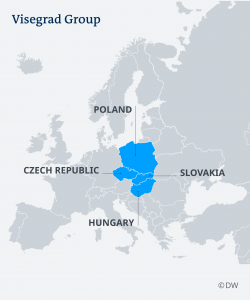
Indonesia attempted to boost the potential for cooperation with four Visegrad countries on 8 October 2019. The Visegrád group which is called the Visegrád Four or V4 is a sub-regional organization of Central Europe which consists of four countries, namely Czech, Hungary, Poland, and Slovakia.

The Visegrad countries group cooperation began on 15 February 1991. The V4 group is substantially formed to further strengthen economic and political integration within the European Union.

Vice Indonesia Foreign Minister, Fachir stated at the 2019 Indonesia-Visegrad Group Business Forum in Serpong, 17 October 2019, in the sidelines of the 2019 Trade Expo Indonesia: “Strong relationship among the Indonesian and V4 business actors will affirm Indonesia’s existence in the region that is deemed strategic as a trading hub that connects West Europe, Central Europe, and East Europe.” (https://kemlu.go.id/).

Business forum activities are one of the priority programs of President Joko Widodo’s vision to further strengthen economic diplomacy.

The economic interaction between Indonesia and the Visegrád region so far is still very limited, even though with an average economic growth of above 4 percent, the countries in this region have great potential for cooperation.

The prospect of cooperation with Visegrád countries is considered to be more promising with their rapid economic growth at an average of 4.1 percent, far above the average economic growth of the European Union (EU) which is approximately 2 percent.

The combined economic size of the V4 countries is equivalent to that of the 5th largest economy in Europe, and through the Visegrád Group, these four countries have an increasingly prominent bargaining position within the EU.

The magnitude of the economic potential of Central Europe has not been fully explored by Indonesia. For this reason, the Indonesia-Visegrád Business Forum will be an excellent opportunity for Indonesia to learn about and take advantage of opportunities for economic cooperation in the four countries, as well as to find solutions to some of the challenges it faces.

However, both sides keep optimistic and positively regarding the value of exports and imports between Indonesia and the V4 countries that accumulatively kept increasing during the last five years (2014-2019), with bilateral trade volume reaching US$ 1 billion in 2018.


In mid of October 2019, the business forum held and attended by 55 Indonesian companies and 48 companies from Visegrad countries which emphasize several elements that could be synergized continuously, namely technological advances, labor, and market size.

The business forum activities were then filled with business matching events between Indonesian entrepreneurs and V4 countries, most of who are engaged in food, apparel,  assembly, information technology, pharmaceuticals, human resources, energy, and infrastructure.

It can be done through increasing Indonesian manufactured products export. The volume of trade that has been achieved between Indonesia and the four Visegrád countries is equal to US$ 1 billion US dollars in 2018 (Antaranews.com, 8/10/2020).

Suppose Indonesian entrepreneurs and V4 countries’ strong partnership will further strengthen Indonesia’s foothold in the European region. Visegrad is considered strategic as a trade center hub connecting Western Europe, Central Europe, and Eastern Europe.

The Indonesian government also encourages the labor and technology services sector to be developed in economic cooperation with Visegrad countries.

This relation also aims to enhance cooperation in the sector indicated by the signing of six memorandums of understanding (MoU) by the Indonesian company and its partners from Visegrad, for the provision of professional and skilled labor on the sidelines of the Business Forum Indonesia-Visegrad in 2019.

Increased sector cooperation was represented by the signing of six memorandums of understanding (MoU) by Indonesian companies and their partners from Visegrad, to provide a professional and skilled workforce.

At the signing of the MoU, everything was about human resources related to work services due to Visegrad countries necessary.

As a group whose economy is driven by the industrial sector, including the automotive and shipbuilding, the four Visegrad countries, especially Hungary and Poland which had been employing workers from Indonesia.

The number of Indonesian workers, so far, is still small, only reaching hundreds of people. However, Indonesian workers are considered to have advantages over a number of workers who come from other ASEAN countries.

In general, Indonesian workers are considered to have a good character who is more loyal and professional, and a number of companies that employ them in Poland and Hungary are more comfortable with the presence of Indonesian workers in their countries.